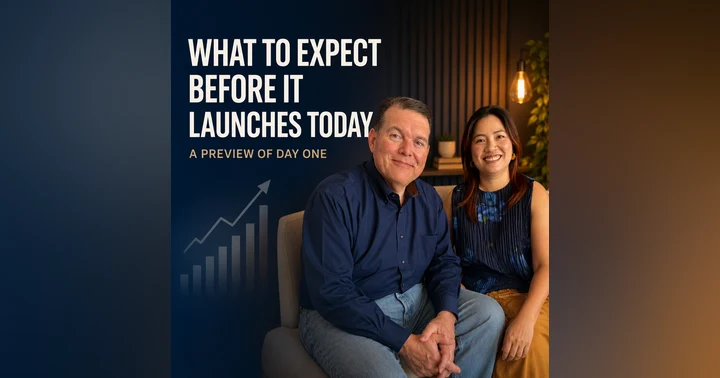
Before We Launch: Inflation, Flood Insurance Deadlines, and Your Money Questions

 Apple Podcasts
 Spotify
 YouTube
 Rumble
 Podurama
 Amazon Music
 Key Takeaways
- Inflation affects specific expenses like gas and groceries much harder than the reported average headline inflation rate of 3.4%.
- The federal flood insurance program has an upcoming deadline at the end of September, and policies carry a 30-day waiting period before taking effect.
- Credit card interest rates remain exceptionally high, making it crucial to pay balances in full monthly or attempt to negotiate a lower rate with your provider.
- Regularly checking your credit report is essential because the FTC notes that one in four consumers have an error on their report.
- Proposed tax changes regarding tips and overtime typically affect your tax return at filing time rather than immediately changing your weekly paycheck.
Gas is up almost 30% from last year, my flood insurance deadline is closer than I thought, and my paycheck isn't doing what I assumed. This is a preview before our daily live show later today at 11:30 AM Eastern.
I'm Ralph Estep Jr., a licensed public accountant with 30 years in the business, and I'm joined by my cohost Juliet Chuang. Starting today, we're live every weekday at 11:30 AM Eastern talking about money without the shame.
Takeaways:
- Inflation affects different expenses differently; gas and groceries may hit harder than the reported average.
- If you're in a flood zone, make sure to check your flood insurance before the deadline hits.
- Understanding your credit report is crucial; errors can cost you, so check it regularly.
- If you're self-employed, set aside 25-30% of your income for taxes to avoid surprises later.
- Car insurance premiums can drop, but if yours hasn’t, it's time to shop around and save some cash.
- Be proactive with your finances; start a separate account for tax savings to simplify your money management.
You can also watch this on YouTube: https://youtu.be/9OzcGs_cNXo
Watch us live today at 11:30 AM Eastern: becomingfinanciallyconfident.com/live
Got a money question? Send it to me: becomingfinanciallyconfident.com
Links referenced in this episode:
- becomingfinanciallyconfident.com
- becomingfinanciallyconfident.com/live
- becomingfinanciallyconfident.com/wallet
- fema.gov
- floodsmart.gov
- lawdepot.com
Companies mentioned in this episode:
- FEMA
- TransUnion
- WalletHub
- Law Depot
- Valero
Frequently Asked Questions
What does the 3.4% inflation rate actually mean for my grocery and gas bills?
The reported 3.4% headline inflation rate is an average, meaning individual items like gas and groceries can experience much steeper price hikes that impact your wallet harder.
Why do I need flood insurance if I do not live in a high-risk flood zone?
Standard homeowner insurance policies specifically exclude flood damage, and one-third of all flood insurance claims occur outside of designated high-risk zones.
Why does my paycheck look the same despite news about no tax on tips?
Tax exemptions on tips and overtime typically manifest as deductions or refunds when you file your tax return rather than instantly changing the withholding on your weekly paycheck.
How often should I shop around for car insurance?
You should consider shopping your car insurance policy every six months to compare rates, even if your current provider has kept you loyal for years.
00:00 - Untitled
00:10 - Current Financial Concerns
00:31 - Introduction to Financial Confidence
16:33 - Understanding Flood Insurance and Interest Rates
28:20 - Understanding Medical Bills and Credit Reports
37:21 - Understanding the Impact of Credit on Financial Decisions
50:50 - Financial Check-In: Proactive Measures for Money Management
Juliet Chuang
Today we're looking at four things that could affect your money right now.
Ralph Estep Jr.
Yeah, gas is up, electricity is up, and we're going to break down why the inflation number you keep hearing might not match what you're actually paying.
Juliet Chuang
There's also a deadline coming up for flood insurance. And if you need a new policy, we waiting could matter.
Ralph Estep Jr.
And later, we're going to answer four money questions people are asking right now. We're going to talk about taxes, medical bills, your credit report, credit repair companies and side hustle income.
Juliet Chuang
Let's get into it.
Ralph Estep Jr.
Becoming Financially Confident.
Juliet Chuang
Welcome to Becoming Financially Confident, where we break free from money shame. One conversation at a time. We're live every Monday through Friday from 11:30 to 12:30pm Eastern.
Ralph Estep Jr.
And if you're catching us right now, this is actually our final, what I call dress rehearsal of the show that we're launching on Monday.So if you're listening to this Monday morning, what we decided to do is we released this as sort of a pre release so you can get a feel for what we're going to be doing. But you better catch us every day, like Juliet just said, Monday through Friday at 11:30am Eastern Time.But don't worry if you can't catch us live, you'll still be able to catch the podcast where we're aiming to release that every day about 5pm on the East Coast. So let me introduce myself, if you don't know me, I'm Ralph East Jr. I'm a licensed public accountant and I've been doing this gig for 30 years now.
Juliet Chuang
And I'm Juliet. I'm just a regular person who's going to be asking Ralph all the questions that I have because you might have them too.
Ralph Estep Jr.
Yeah, we're two very different people having conversations about the things that affect our money and they affect your money. Now I'm going to set up some house rules from the beginning. Number one thing, there's no shaming anybody about money on this show.Nobody's going to be judged for what they didn't know. And what happened yesterday happened yesterday. And we're going to build on today from this point forward.
Juliet Chuang
So if you have a question that you want us to have a conversation about, send it to us@becomingfinanciallyconfident.com. No question is off limits.
Ralph Estep Jr.
Yeah. And listen, wherever you are on your financial journey, know you're not alone in any of that. So let's get right to today's headlines.
Juliet Chuang
So what is happening right now with prices, gas, flood insurance and interest rates and what those stories actually mean for you. It's really important if you want to join the conversation live, we're here every weekday@becoming financiallyconfident.com live.Okay, so the first story is about inflation. The Bureau of Labor Statistics put out the July inflation numbers on Aug. 12.The July inflation numbers was 3.4%, but some of the things you actually pay for moved in very different directions. So, Ralph, when I hear 3.4%, does that mean everything that I purchased all got 3.4% more expensive?
Ralph Estep Jr.
Well, I wish I could say it was that simple, but it's not.Because a lot of people might be screaming through the telephone or screaming through their headset right now and saying, wait a minute, Ralph, stuff is a lot more expensive than that. So I broke down a couple of things you need to understand. The grocery run right now.If we look at this year versus last year, a $200 grocery run last year is actually $205.40 now. So that's what we're talking about there. That same basket that you've been buying every week is about $23 more a month.Now, if we're looking at electricity, the power bill is up about $6.30. So that one is actually up 4.2%. Now here's an interesting one, and we're going to get into this a little deeper in a second.Car insurance actually went down four and a half percent for the first time in years. And what that means is basically for a $900 six month premium, you're getting about a $40 reduction.Now, Shelter, what we would call, you know, shelter where you live and all that, drove two thirds of the monthly move.So core inflation, that's what the Federal Reserve studies with core inflation, that's how much things are going up, is actually about two and a half percent right now. And headline inflation, which, which, which Julia just mentioned, is at 3.4%.
Juliet Chuang
So it's the takeaway here is that just because it's 3.4, it doesn't mean it's across the board. It depends on what that specific thing is.
Ralph Estep Jr.
Oh, absolutely. And you could look at different things, like, for example, beef is up a lot right now, but chicken and other things aren't up as high.Lettuce is dropped through the basement because of that big scare with lettuce. So if you want to eat a salad, today's a great time to do that because right now you go to the grocery store and, and lettuce prices are a lot less.
Juliet Chuang
I don't know how Much. I trust the lettuce right now, but.
Ralph Estep Jr.
No, I hear you on that. I hear you on that one. I hear you on that one. Julia, you got to be careful.You know, I don't know about you, but when I see those kind of things happen in the news, I'm like, you know what, I'm a meat and potatoes kind of guy. So like, maybe I just go back to the meat potatoes. Although I do like a good salad. But that kind of stuff scares you, of course.
Juliet Chuang
Of course. And so I want to highlight on one thing you mentioned that car premium prices dropped.Well, if I am someone whose premium didn't drop, who actually got that money.
Ralph Estep Jr.
Back, well, that's an interesting thing. And we're going to have a show about that in a week or so. We're going to talk about how you can shop this around.But this is one of those lines where you can actually do something. And one of the things that I recommend to all of the people that I talk to is shop your car insurance because it's real easy to get.And listen, I'm going to preach to myself here for a second. I think I've been with the same insurance company for 20 years now because you get, you get used and they just handle it for you.But this is one of the things that you really should shop every six months. Just go out there on the market and say, hey, call your insurance agent or go online, make some comparisons.Because what's interesting is the actual cost to repair cars actually went up by 6.6%, but premiums still fell a little bit, which is an interesting weird dichotomy in the numbers. It's kind of fascinating.But no, if you're still paying the same insurance company you've been paying for 20 years or even 5 years, go shop that around because you might be able to do better. Now, of course, it depends on your driving record. If your driving record's not great, you may shop around.It might cost you more, so stay where you are.
Juliet Chuang
Yeah, so, but the, the point here is it is important to go shop around to see what else is out there, right?
Ralph Estep Jr.
Oh, absolutely. I think you should do that with everything.You know, whenever you think just because you've had this relationship with your bank or you had this relationship with other entities with other vend, Go out there and kick the tires and see if there's anybody can give you a little bit of a break, because 20 or 30 bucks a month or even $100 on a six month policy could really help your budget. A lot. It sure does, Adam.
Juliet Chuang
Yeah. So you mentioned that groceries and electricity aren't the only things that are getting more expensive. We talked about premiums going down.A lot of the other stuff are staying high. What about gas? What's going on with gas?
Ralph Estep Jr.
Oh, yeah, gas is one of those things. My youngest son is a barber and every time I see him he goes, dad, you keep saying gas prices are coming down, dude.But every time I go to fill up, it's like I'm getting hit with a br. I'm like, it's true. Regular gas right now, as we started to record today, is at $4.00 eight and a half cents.I don't ever understand gas price of being half cents. But anyway, that's a whole nother. But here's the thing that's interesting. A year ago it was at $3.14 $0.07. So what does that mean in real dollars?If you've got a 15 gallon car tank, your fill up now is about $61. A year ago that same fill up was $47. That's a big number. That's 14. If you multiply that times how many times in a year it's over $700 a year.That is costing more, about $61 a month and that's up 29.8% year over year. Now, of course we understand why that is. Well, we could say we know what that is.I mean, we've got a war going on in the Middle east and that's certainly causing some of this. There's a lot of uncertainty and bluntly, I think there's a lot of people playing games with that too.I'm not going to get into a big political discussion, but I think there's a lot of supply and demand games that are being played with this. But the bottom line is you got to your car up, so you just have to live with this and you got to make some room in your budget a little bit.
Juliet Chuang
So what are some quick tips you have for people who drive a gas car and are just like very worried about the increased prices?
Ralph Estep Jr.
Yeah, I think one of the things you can do here is there's fuel rewards cards. You can get between 10 and 30 cents a gallon on 15 gallons. That could save you, you know, from a dollar and a half to four and a half dollars.Shop around. Another thing you can pay attention to, a lot of people don't think about this one. An app called Gas Buddy. They are not affiliates of ours, but.
Juliet Chuang
I used them before.
Ralph Estep Jr.
Yeah, well, tell us about that. What did you Think of that.
Juliet Chuang
Well, I use it maybe like over 10 years ago. It's actually really helpful in finding gas stations that you really care about. So, like, especially for me, I don't know if you care about this.I also read a little bit into what gas station it is to see like what level, quality, level of their oil is. So right now, like, if I can, I always go to Costco. But then if I don't go to Costco, I usually go to Arco or Shell.
Ralph Estep Jr.
Yeah, I think that's a good way to look at it too, is that if you go shop, I'm one of these people that believes in. And I have two vehicles. One is an all EV vehicle. So that one I plug in, the other one is a gas vehicle.And I gotta be honest with you, the last couple weeks or last month or two, I've been driving the EV a lot more because it just seems like. But the problem with that is the price of electricity has gone up too. So they're getting you one way or another.So the big takeaway from this first story is, yes, prices are going up. You've got to build margin into your budget.So when you ask me what you can do, you got to have that margin built into your budget if you're living super tight in your budget. We'll talk a lot about that on this show, what I call the dollar job framework.But let's talk about building some margin because I really think that's where you're going to start to see some of these things move on and get better.
Juliet Chuang
I totally agree. Our next story is about the federal flood insurance program.And this is super important because it has a deadline if you need to have a federal flood insurance policy. So, Ralph, I'm not in a flood zone. I understand that you are. So why do I need to pay attention to this?
Ralph Estep Jr.
Yeah, so we're going to do Ralph's moment of sharing here because when we were preparing for the show today, Juliet said, I don't even understand what a flood zone is. I shouldn't say. Maybe you didn't say that, but you understand there's a flood map. So about.I guess it's been about 15 years ago I bought this farm that I live on now. And I had no concept. I've heard of the flood zone. It's called the hundred year flood zone.And they have these maps of what has been flooded in the last hundred years. Well, the reason you need to pay attention to this is those things change. So I'm going to do a little Little fun.Now, if you're listening to the show right now, I'm going to encourage you, go check this out online. You can watch our replay. But I'm going to share my screen right now for those of you who are seeing us online.And I'm actually going to pull up the flood map for my property. So let me do that right now. So what you're looking at here on the screen, and again, if you're listening to US Audio, I apologize ahead of time.But it's basically a screen that I got from fema, which is the US Government flood, you know, the FEMA Emergency management. So what you see on this screen. Yes, correct. Yep. Fema.gov I think it is. Yeah. Fema.gov and you can go pull up your property.You can actually type in your address. I've already done that here. And what you'll see here on the screen is this big blue area and you can see there's also a green area.So this is actually my farm where my office is and my home. And you can see that all of the buildings are outside of the flood zone. So I had no idea about this.When I first moved to the property, there were some, what we'll call outbuilding, some barns and all like that were actually in the flood zone. And I, when we bought the property, I had to go, you know, we got a mortgage for the property.And the mortgage company said, wait a second, we're going to need you to buy a flood insurance policy. And Ralph said, what, what is a flood insurance policy? I had no idea.And they said, well, if you have a building that's in the, quote, flood zone, I said, well, what does that mean? They said, well, in the past hundred years, that area has gotten flooded.Which kind of makes sense because my behind my property is what they call the thousand acre marsh. So it is marshland.But basically, what this means in layman's terms, and we switch back to our two camera here, what that means in layman's terms is if you are in a flood zone, the US Government provides flood insurance at a discounted rate. And here's why that's important. The average flood insurance claim. Are you ready for this, Julia? The average claim is $68,000.
Juliet Chuang
Whoa, that's a lot.
Ralph Estep Jr.
And what a lot of. Yeah, and what a lot of people don't understand is your standard homeowners policy specifically excludes flood damage.So, and here's the one that people don't think about. Let's say you have a washer and a dryer in your house and you have it in the basement of your home.Your homeowner's policy, let's say your washer decides the cable that gets, you know, the water line gets disconnected and it floods your basement. Guess what? Without flood insurance, generally that's not covered. So check with your insurance company. Yes, exactly.
Juliet Chuang
That's crazy to even think about. Like washers considered a flood.
Ralph Estep Jr.
Exactly. You have to be very careful of that because one to three claims outside happen outside the high risk zones.People who are in the high risk zones know they're in the high risk zones because when you go to buy the property, they're going to do a search and you're going to say, well, Ralph, your property falls in the map, you're going to pay floating trip. And this is a big issue right now.And in Florida, I've got a lot of clients in Florida who can't even get flood insurance because hurricanes are coming through all the time. So insurance companies have lost tons of money because of this.So if you find yourself in this, that's why this headline's so important, because there is a federal flood insurance program and its authority as you know, get a little political for a second. It seems like with our government, everything runs out. We can't do anything that's like long term.So right now, this federal flood insurance program authority runs out at the end of September. Here's the problem. Even if you go get a new policy, every single policy has a 30 day waiting period. So you've got to buy it and you've got 30 days.And if you wait till the deadline, it might be too late to get a new policy in time. Now, there's no weight on that if it's tied to a mortgage. The mortgage companies, their lobbyists with the Congress are good.So they make sure you can get that. There's no wait if you add it or renew it.And if all of a sudden you found yourself that all of a sudden you weren't in the flood map but something changed and you're in it, you do have the ability to do that within 12 months. So that's what we're talking about here, this federal flood insurance program.But it's one of those things to ask your insurance person, look at your actual homeowner's policy. We'll talk about that in a week or two about. We're going to have a section on the show called the Envelope.We're actually going to break open and talk about the things you're getting in the mail. But this is an important one because you, like I said, the average claim, $68,000. That's a big number.
Juliet Chuang
That's really good to know. Okay, so there's something that you said there I have a question about.So you said if you have a mortgage, you most likely going to be okay, you should have that flood insurance. So basically you're just saying for other people who maybe are renters or don't own their homes and they need flood insurance. Potentially.First one, go see if you need it and then two, make sure that you're aware about that 30 day waiting period.
Ralph Estep Jr.
Yeah. So if you have a mortgage on your home, the mortgage company keeps track of those flood maps and, and they're going to go look.It's what happened to me. They're going to go look and say wait a minute, we got to pause for a second.Your building is located in the flood zone so therefore you have to have a flood policy. Now of course I kind of ignored them at first, to be honest with you. And what they did was something called forced placed insurance. So.Because I just ignored them. Yeah. So what they did was they went out and bought an insurance policy on their behalf and said, and we're going to send you a bill for the premium.It's called Force place insurance. So like it works with car loans.And what the way it works is if you, the mortgage company or the car loan, the lender wants to make sure they're covered. So what happens oftentimes is they'll go buy a policy on your behalf and they send you a bill for it. Here's the dirty little secret about that.It usually costs 10 times what the actual policy costs because they're not going to shop it around, they're just covering their loan. So that's one of these things where I say don't worry about it so much if you have a mortgage because you're going to be tipped off to that.But this is a good time to think about it. If you're in an area that might be prone to this, I'm going to give you a website in the 800 number.Floodsmart.gov that's floodsmart.gov we'll put that in the show notes. And there's also an 800 number. That's 800-621-3362. So this is one of those things where be aware of the flood zone.Understand your policy doesn't generally cover that. And just one of those things to be intentional about.
Juliet Chuang
Yes. And our last story is about interest rates.We saw in the July meeting, minutes at Fed held rates steady, but three people actually voted to get them even higher. So higher Ralph, does that mean, like, if I'm carrying credit card debt, that's not exactly great news, right?
Ralph Estep Jr.
Exactly. And here's the thing I really want to key in on.What this is telling you is the Fed meets quarterly, and the Fed said, some of the board of governors, I'm not going to get into a big discussion about that, but some people are already saying interest rates have reached the bottom. There's a lot of people out there saying, oh, interest rates are still going to come down, Mortgage rates are going to come down.I don't think that's going to happen. I think we've seen the lowest rates we're going to see. I don't think they're gonna go down at all.So the Fed held the rate right now, but the vote was 9 to 3. So there's three dissenters who wanted higher rates.So I think that's, I think that's telling the markets, hey, interest rates are going to go up or they're not going to go down for sure. That's the one thing we can take. Number one thing we can take away. Interest rates are not going down.So if you're in the market to get a mortgage right now, I don't think this is the time to sit on the sidelines and wait. But now let's go to your real question. Let's say you got a credit card and you're carrying credit card debt of $6,000.The average credit card rate right now, 22.15%, which means on a monthly, it's a lot of, It's a lot of money, which means that you're paying $111 a month in interest alone. Just interest.That's $3.64 every day before you pay down a dollar of principal, which means that if you're just paying the interest only, you're going to pay this credit card for the next 30 years. And as the interest rates creep up. So to answer your question, yes.So if the market interest rates go up, credit card interest rates are going to go up, car loan interest rates are going to go up, mortgage interest rates are going to go up. I think we've reached a bottom where we're not going any lower.So I think you got to buckle up, buttercup, because we're fixing to get into higher interest rates.
Juliet Chuang
I mean, I think for me, this thing is just reminding me about my own money values, right? Like, never spend more than I actually have be able to pay my credit card balances every single month, so I don't have to accrue that interest.Does that. Is that something that you also live.
Ralph Estep Jr.
No, that. That's absolutely correct. And I just want to take a minute here because it looks like we got a comment.And I will apologize ahead of time as I'm working through this. This is our first live show, and. Okay, we got a comment for. Let's see. Great conversation from PR Shield. So thank you so much for your comments.And this is an interactive show, so if there's something you want to comment, just go right into the comments. If you've got a question, please put it in the questions.But getting back to your question, Joel, I didn't mean to be distracted there, but I was a bit distracted with you. Yeah. So can you repeat your question again? I'm sorry, I got a little bit distracted there.
Juliet Chuang
Okay. I think.I think what I was saying that, you know, hearing about the interest rates going up, it just reminds me that I need to personally, like, everybody has their own money values, but that I want to make sure I have enough money to pay down my full balance every single month so that I don't accrue interest at all. Because that 22%, that is a crazy number.
Ralph Estep Jr.
Yeah, I agree with you, and I think that's the good way to live your life.The other thing I'm going to encourage you to do, I spoke at a conference this past weekend, and I gave five pillars for financial Getting back to financial strength. One of the things you can do is actually pick up the phone and call your credit card company and say to them, hey, can you reduce my interest rate?And people sometimes say, wait a minute, Ralph, they do that? Yes, they will. Not everybody. It depends on your credit history. Depends on if they're interested in keeping your business.But if you're one of those folks that is really paying attention to your credit, this is one of those phone calls. Won't take you about a couple minutes. And be persistent. You might find that you can get that interest rate lower. Yeah.
Juliet Chuang
And so I know, like, we definitely will have a deep dive on credit card interest and credit card payments and credit card debt in general.So we can talk about all of these, like, money values, how to think about it, how to look at the numbers and, you know, understand what it really means.
Ralph Estep Jr.
Yeah.And the other side of this that we have to also mention is not only are interest rates staying the same or going up on the borrowing side, but they're going up on the savings side too. So it's not all bad news. If you've got money sitting in low interest accounts, look at what you're earning.Don't just assume that that because this is nothing. I see all the time in my practice is sometimes people are sitting in savings accounts that aren't making them a nickel, they're just small numbers.I love high yield savings accounts for this. I love CDs, making sure you're laddering those things. And we'll talk about that in future shows as well.But if you've got money sitting in low interest, this is a great place to really think about what can I do. And one of the guys that spoke, guy named Marsh, he spoke at Jackson Hole this morning and we'll be updating that in the show pretty soon coming up.So my big takeaway here is that I do not believe that interest rates are going to go any lower. So if you hear people talking about I'll just wait on the sidelines, I think interest rates are going to go down.Mortgage interest rates are going to go down. My personal view is I think we've hit the bottom and I don't think we're going to get any lower than that.So that's where I land at this point right now. But of course, I don't have all the answers, but I'm pretty sure that that's about where we are.
Juliet Chuang
I agree with you.
Ralph Estep Jr.
All right, now I want to talk about WalletHub. So WalletHub is one of our affiliates. And one of the things you're going to notice about our show now is we have affiliates.And I'll talk about what that means here in a second. But whatever your financial situation looks like, it's important to know where you stand with your credit.We just talked about how interest rates are higher if your credit is less. So you don't have to like that number, but you should know what it is. Now, I've been an accountant for over 30 years. Yes.I'm a little older than most and I've seen how easy it is for people to avoid looking at their credit because they're afraid of what they're going to find. But the Federal Trade Commission, that's the group of the government that studies these things, found this interesting statistic.1 In 4 customers, 1 in 4 had an error on their credit report that could affect their score. And you won't know what these errors are if you don't look at your credit reports. So that's a pretty good reason to look.You can't dispute a mistake that you don't know about. It's all about building clarity. And that's why we partnered with WalletHub.WalletHub lets you check your credit score for free and monitor your credit using TransUnion data. That's one of the three credit bureaus. So if you'd like to find out more about WalletHub, we've got a link here.Go to becoming financiallyconfident.com wallet Again, that's becoming financiallyconfident.com wallet. Now, TransUnion is one of the three major credit bureaus, and lenders could use different bureaus or scoring models.And like I said, I'm an affiliate with them, which means this. I earn a small commission if you sign up through our link, but it doesn't cost you anything else.So that, again is becoming financiallyconfident.com wallet. Now we're going to get to some questions that we have from listeners.So let's get right to our first question, and Juliet is going to read the question we got, and then we're going to go from there.
Juliet Chuang
Sounds good. So they passed no tax on tips and no tax on overtime. So why does my paycheck look exactly the same?
Ralph Estep Jr.
Well, so that's an interesting question. And thank you for sending in that question, by the way. What, what actually happened? And this is where we're.I got to talk politics here for a second because everybody heard no tax on tips, no tax on overtime. Yes. But as a tax professional, like I said, I've been doing this for 30 years. It's not quite that simple.And the specific question is why does my paycheck look exactly the same? Simple answer is it doesn't affect your paycheck. It affects when you actually go to file your tax return. And I'm gonna use my son as an example.My son, my youngest son is a barber, and he earns income by salary, and then he earns income through tips. The way that this works is you report your tips to your employer throughout the year.And then when you go to file your tax return, somebody like me, or if you do it yourself, will, will take a deduction for a certain amount of tips. The number is $25,000 worth of tips. But here's this dirty little secret they don't talk about.You're still paying Social Security and Medicare tax on those tips.And this is what my son kind of ran into because I said as soon as this came out, I said, listen, dude, I said, make sure you're reporting all of your Tips, you know, hint, hint, nudge, nudge. Not everybody reports all their tips, but they should. So he says to me, he says, dad, he says, I did what you said.I reported all my tips and my paycheck actually went down.
Juliet Chuang
Right.
Ralph Estep Jr.
And he said, how is that possible? I said, well, let me explain it to you. So he got a math lesson.And basically the reason it is is because even though you're going to basically get a deduction for that, when you file your tax return, it shows his income on your pay stub, which means you're going to pay federal, state, Social Security and Medicare tax on those wages. Now then when you go to file your tax return, it comes back to you. But there's a big disconnect because people here, no tax on tips.People hear no tax on overtime. And they just assume, well, if I earn tips, there's no tax right now. If I earn overtime, there's no tax right now.But unfortunately it doesn't work out like that.
Juliet Chuang
Okay, so what you're really saying is, like, if you get tips and you get overtime, it is really important to make sure you. What is it? State that on your.
Ralph Estep Jr.
You got to report it for two reasons. Not to interrupt you, but number one is you don't want to go to jail like Al Capone. Al Capone went to jail for tax evasion.So you have to report your income. So number one, report your income. Number two is you could get a deduction for this, but go ahead and continue.
Juliet Chuang
Right, right. And then so basically the deduction comes at when you file your taxes and when you get money back, well, like it'll help decrease that amount.So it's almost like I'm just reminded of, you know, do you want, do you want the benefits of it now or do you want like more benefits later? That kind of a thing is that.
Ralph Estep Jr.
It's all about intentionality. And that's what it comes down to. Number one, you should be reporting your income because if you don't, that's tax evasion.Tax evasion will get you locked up. That's when the guys with the gold badges and guns from the IRS can show up at your house and say, hey, you didn't file your taxes.That's what put Al Capone in jail. That's what's taken down a lot of high profile people. So yes, it's kind of report now, get the benefit later.It doesn't necessarily mean that you're going to get a refund. I want to be clear about that. What it does is it reduces your taxable income.So when you go to file your tax return, if you've done everything correctly and you've done your estimates correctly and all your withholding is correct, then yeah, absolutely, Juliet, you should have a refund. I want to throw a couple numbers out that you need to understand, though. The tips are capped at $25,000. So once you hit 25,000, that's the max.The overtime is actually capped at $12,500. Now if you file jointly with a spouse, it's up to $25,000 for a joint. But here's the other thing you need to understand.There are also phase outs on this.What I mean by phase outs is when they built this legislation in, they said if your income is above a certain level, they're going to start taking away some of those benefits. So the phase outs for a single person on both of these is 150,000 and 300,000. Joint. I love tax code. This applies for years 25, 26, 27 and 28.So this is a, I call it short term thing. But if you already owe a very little income tax, you might get a benefit from that, which is a good thing.
Juliet Chuang
Okay, my biggest takeaway, just always make sure you're reporting accurate numbers. That's the biggest takeaway.
Ralph Estep Jr.
Yeah. And just realize that you are going to not get the benefit right now and your take home pay might go down a little bit.Well, let's get to our second question. And this is our second questionnaire, if you want to read that one. Julia.
Juliet Chuang
Yeah, Second question. I thought they got rid of medical bills on credit reports, but mine is still sitting there. What happened?
Ralph Estep Jr.
Yeah, this is another one that's really interesting. So the Trump administration put together, I don't want to call legislation, but an executive order which basically said that if you have a medical.Let me start from a little bit different work.Let's say you go to the doctor and for some reason you didn't pay the bill, your insurance company didn't cover it, then they start sending you notices like, hey, Juliet, by the way, when you came in and had that root canal done, we told you you need to pay us. You didn't pay us. At some point, that dentist, I'm using a dentist as an example, is going to say, juliet, are you going to pay us?And you say, I'm not paying you. Okay, fine. So they're going to send that. Well, correct. Yeah. I mean, and that happens all the time.
Juliet Chuang
Yeah.
Ralph Estep Jr.
But it's not always your fault because sometimes you assume that your Insurance company's gonna pay it. And so it's easy to get. And I'm not, I'm not throwing anybody under the bus here. There's reasons for this.But basically what happens, at some point that doctor or that hospital is going to sell that debt to a third party collection agency. That third party collection agency basically keeps 33% as the average one, and they keep 33% of that. But here's what they do, which sucks.They add that to your credit report and they say, juliet, when you went to the dentist back in 2025, you didn't pay. Now all of a sudden, on your credit, it shows a $200 collection item. And what that does is it pulls down your credit score.So the Trump administration came in and said, hey, we are going to fix this. We're going to make it so that you don't have to have these on your credit report because it was hurting people.It was hurting people when they got car loans, with mortgage loans, all that sort of thing. But then, of course, the court System decides on July 11, 2025, Eastern District of Texas. That's unconstitutional.So now what happens is medical collections can still be shown up on the credit report. So right now, the answer to the question is, unfortunately, as of right now, medical collections can still appear on your credit report.
Juliet Chuang
So what protections as, like the consumer as the end consumer, what protections do they actually have right now?
Ralph Estep Jr.
Number one thing, if you get a medical bill from a doctor or a hospital, don't put that in the drawer where you don't look at stuff, pay attention to it.
Juliet Chuang
I get that.
Ralph Estep Jr.
I get that, absolutely. And my son, I feel like I'm talking about my youngest son all the time.My youngest son just went through this and when he got the medical bill, I said, son, listen, when you get that bill, number one thing I want you to do is request an itemized bill, line by line. What did they charge me for? Because what you'll find is, and I'm not throwing the doctors under the bus.Sometimes there's 15 different of people doing this work. Make sure you understand what you got billed for. Second thing, make sure that your insurance is current with the provider.Make sure you've given them your last insurance card. If it isn't, pick up the phone and call them, hey, I have different insurance. Can you resubmit that?
Juliet Chuang
Yeah.
Ralph Estep Jr.
Then once you get past that, then the third step is actually call them and said, hey, do you have any financial hardship plans? A lot of people don't realize this. Call them and say, hey, will you settle this debt?Nine times out of ten, they'll settle because they want to get something right. In general, right now, the credit bureaus are not reporting medical collections that are under $500. But again, know what's on your credit report.That's what we talked about. WalletHub. We talked about get your credit report. These are credit bureau policies, not federal law.So the credit bureaus individually can say, here's what we're going to do. Some states have done these as well.So the big takeaway here is, yes, medical collections can show on your credit report, pay attention to those, offer to make payments on those. And that's another thing a lot of people don't think about. Call them up and say, listen, I know I owe you a thousand. I'll give you a great example.There was a guy I worked with. It's probably been 20 years ago now, and he had retired early because he had some health issues, and he wasn't on Medicare at the time.So he had his period from when he retired to when he could qualify for Medicare. We ended up having quadruple bypass surgery. And the bill was like three or four hundred thousand dollars, and he didn't have the money to pay it.And he said, what? I did, Ralph. He says, when I got the bill, I was very nice. I called him and said, listen, I can't afford to pay this.I don't have insurance that covers this. And he says, I pay them $100 a month. And he says, I'll probably pay $100 a month for the rest of my life.But it doesn't go to collections because he has a current payment plan with the. I don't know where that stands now. It's been a long time ago, but now, like with my son, he got a bill. This is crazy. He went to the.The emergency room. He was having some issues, some GI issues. He ended up getting a bill for $7,800 for being in the ER about two hours and got. I think it was a.Not a CAT scan, but one of those type of tests.
Juliet Chuang
Yeah.
Ralph Estep Jr.
And so he says to me, he says, dad, he says, I don't understand this. Well, in his particular case, his deductible for his medical insurance is $6,300. So he's got to pay out of pocket the first $6,300.So number one thing, if you have a high deductible plan that needs to be a target of your hsa, your health savings account, or a target of your emergency fund, he's not there yet. Fortunately, he had some of that. So I said to him, I said, second thing is, let's go look at the hospital's website.We pulled up the hospital's website, and I said, let's look at billing. And I pulled up. They said, financial hardship. I said, let's read this a minute. And he was kind of frustrated with me.He's like, dad, they're not going to do anything. We're reading through it. I'm like, okay, how much is your income? I said, you qualify for financial hardship. He says, what does that mean?I said, fill out this form and they will reduce the amount that you owe. And I said, do it today. I said, provide them with a copy of your tax return, your pay stub, all those kind of things.A lot of people don't realize that go and do that or the other side of it at the beginning of the process. And I do this at my dentist because I don't actually carry dental insurance. I say to my dentist, what is your cash price?And so you can ask doctors that too, is, what is your cash price? Now, we throw a lot of stuff out there. This is probably a great topic to do, a deep dive on, one of our shows coming in the future.But all these things are tough. But the big takeaway here is be aware. Get itemized bills.Make sure your insurance is up to date, and simply ask the question, hey, do you have any ability for me? Number one, is there a financial hardship where you can reduce the payment or reduce the bill? And then would you offer a payment plan?All those things can really help you.
Juliet Chuang
Yeah.
Ralph Estep Jr.
All right, well, let's get to our third question of the day. Julia's going to be our third question.
Juliet Chuang
Yeah. There's something on my credit report that isn't mine. Should I pay one of the credit repair companies to get it off? Ooh, this one is interesting.So, Ralph, this is the credit report.And then about credit repair companies, which is like kind of a new terminology, but it reminds me of the, you know, if you don't pay your medical, they give it to a third party. That's what it sounds like to me. Is that. Is that right?
Ralph Estep Jr.
Yeah. So credit repair agencies are no good. Dirty rat, scat, scoundrels. And I'm going to. I'm just. I'm not speaking between the lines. It's factual.In fact, There were some 6.6 million complaints against these clowns in 2025.
Juliet Chuang
Wow.
Ralph Estep Jr.
88% Were credit reporting issues. So what they're doing here is they're selling you a dream. And they're basically saying, you know, Juliet, because here's what they do.They buy data from the credit bureaus and they go and look for people who can least afford it. That's the truth. People who are struggling, people whose credit reports aren't great. And they tell you, oh, Juliet, we can help you.Send us money and we'll help you.
Juliet Chuang
Right.
Ralph Estep Jr.
Don't ever do that. Listen to me, because I'm going to be as clear as I can. Don't ever do that. What they're selling is something that you can do yourself.Yeah, go get a copy of your credit report and we're going to talk about that next week, actually. Go get a copy of your credit report and go through it line by line like you're reading a novel.Because nobody, no third party can remove accurate negative information from your credit report. You have to do that yourself right now. Negative information can remain on your credit report for seven years. Bankruptcies can remain for 10.
Juliet Chuang
Wow.
Ralph Estep Jr.
Yeah. And just because you pay something doesn't mean it automatically comes off your credit report. But do not pay these third parties.You can do it yourself. You can dispute it. We'll talk about that in the future and we'll put. I'll be able to share with you a plan of how exactly to do that, sort of.We'll give you the lines. We'll have a takeaway. You can have maybe something you can print out or you can download. Because this is an area. I used to run a credit union.I was the executive vice president credit union. And we actually renamed our collection people to Member Advocates because what I try to do is help people.It doesn't help the lender for your credit to not be good. It doesn't help anybody. But this is all about having clarity. Most people don't know what's on their credit report.And if you don't know what's on your credit report, and here's where it affects you, the obvious place is it affects you on your mortgage. Your mortgage rates are higher. It affects you when you're sitting in the car dealership.And we're going to talk about that next week, actually, we'll talk about how to get through that process really well. It affects you on your car loan rates. It affects you on your credit card rates. It affects you on your insurance. Insurance companies can actually use.Yeah, they can use your credit score. It affects. For employment. There's a whole lot of things. And so many people don't know what's on their credit Report.I actually run into this a lot because I'm actually Ralph Estepp Jr. And there's a Ralph Estep Sr. And a lot of times things get commingled between the two. And I'd like to say that Ralph Estepp Sr. Honors all his commitments, but I'd be lying to you if I told you he did.So what that does, though, and this happens a lot with people who have similar names or maybe debt got sold from one person to the other. So there is a great way. Every single credit bureau has a way that you dispute that. Now I'm going to throw another website out there.It's annualcreditreport.com you can actually get a free copy of all, and we'll make sure we put that in the show notes, but make sure you get a copy of every single of those three credit reports once a year and read them line by line and dispute stuff. And here's the cool thing about a dispute. This is why you don't need to pay a company to do this.They have 30 days from the time that you send that in that dispute to get back to you. If they don't get back to you, it's gone. It's off your credit report. So if you've got one, go ahead, ask me a question. Absolutely.
Juliet Chuang
Have you ever disputed something and they did not get back to you in 30 days?
Ralph Estep Jr.
Absolutely. I've had that happen several times. In fact, I'll tell you a funny story.So when I worked at the credit union, this was an interesting thing because what would happen is the credit bureaus would. This was back. And because I, you know, I got a little gray hair. This was back when they used to fax everything over.And we had a fax set up just for credit bureau disputes. And people would jump over desks to make sure they got those disputes. Because TikTok. TikTok, you had 30 days.And if somebody actually owed us money, I wanted to make sure that we said, no, this is valid. And it's not just that simple. You also have to shade the date that the debt was what it was for and provide some backup. So it's due diligence.But what happens a lot of times, Juliet, is companies go out of business.
Juliet Chuang
Yeah.
Ralph Estep Jr.
And if they're out of business, guess what? That puppy's coming off. Exactly. And the other problem that you have a lot of times is these debts will be sold to multiple collection companies.So sometimes it'll. Yeah. So.So what we were talking about with the doctor earlier, there's situations Sometimes where collection company A buys the debt and they don't get it collected. So the doctor says, well, I give up on them, and they go to collection company B and they sell it to collection company B.Well, now it's on your credit report twice. And maybe company B doesn't collect it either. Now it's on company C. So you could have that same. Yep.But you could have that same collection item on your credit report 3, 4, 10 times. It just depends on how they did it. So that's why you've got to read this thing. I tell people all the time, dispute everything.Now, don't dispute stuff. That's true. If you didn't make your payments on time, if you made this, hey, listen, we all make mistakes, right?Truth is, I was at a point in my life where I was $50,000 in credit card debt. I get it.
Juliet Chuang
Wow.
Ralph Estep Jr.
I've lived that life. I know what that feels like. That overwhelmed feeling like I can never get ahead. I am not going to judge people.My goal with this whole show, with my whole career, is to put my arm around you and tell you, here's how we can fix this. So that's what we're gonna be talking about on this show, is how to fix stuff. But if you. You. This is the easiest way to.Don't pay some company to go make your credit score go up because they're selling you a basket of goods, number one, that you can do yourself. Number two, they're just going to collect your money and run.
Juliet Chuang
Exactly. I mean, that is my takeaway as well. I'm still. I don't want to derail us too much, but I just want to ask you this clarifying question.
Ralph Estep Jr.
There's no derailing on the show.
Juliet Chuang
Okay. You said back to the doctor dentist scenario, Right? Let's say I have $1,000 medical debt, and they went to collections A.They sold my $1,000 to collections A. Collection A would didn't take it. How is it possible that the dentist is allowed to sell my $1,000 debt to somebody else?Because they already sold it to a company A.
Ralph Estep Jr.
Well, so I probably misspoke a little bit. They didn't actually sell it. They assigned it with the idea that once you pay that, then they collect. They keep 33% and then Dennis gets the rest.But since collection company A wasn't able to get you to pay it, as far as the dentist sees, you still owe them money. So let's say a year goes by or two years go by, they go, oh, that old collection Company A, they stink.We're going to go find collection company number B. And they sell. They don't sell again, they assign it.Most collection companies, there are places, there are times when people buy the debt, usually they pay like pennies on the dollar. So there are places that will go buy the debt. But if you're doing that, you're probably, as the dentist, you're probably getting 10% of that.So they're keeping 90% for themselves, hoping they'll collect it it. But if they assign the debt, which is typically the normal thing they assign it, they're just going to assign it to me.Now, technically, they're supposed to bring back the assignment, but maybe that collection company changed that collection company reported it, but there's nobody there still to report it off your credit report. It happens all the time. And it's a sad thing because I've seen people get turned down for mortgages.I've seen people get turned down for car loans because they just didn't know what was on their credit report. And they thought, hey, I pay my bills every month. It's another easy way to find fraud. And that's why I'm a big believer in, like, I use Norton360.So that when any. Any I actually. And we're going to talk about this in a few minutes for. We're going to have homework on the show, by the way.We're going to talk about homework here in a few minutes. We'll talk. Let me just put that aside for now. Let's get to our fourth question. Does that sound like a good plan?
Juliet Chuang
That does. That does.
Ralph Estep Jr.
All right, we'll get to our fourth question here.
Juliet Chuang
All right, question number four. I drive for an app on the side. How much am I supposed to set aside? Do I have to pay quarterly? And I never got a form. Does it still count?There's a lot of questions in here, Ralph.
Ralph Estep Jr.
There's a lot of questions here. And I'm gonna tell you a funny story. So I went to this conference this past weekend, and we got an Uber.Now, it's my first experience with Uber, which was a whole thing. It's really super simple. So a friend of mine, Dave and I, we get in this Uber car, and this guy was really cool, and I started talking to him.Well, he actually was from Delaware, where I live, which was cool. So we had a conversation and I said to him, I said, so what did you do in Delaware? He said, well, I used to run a service station.He ran a Valero gas station. He said, but you know, he liked the schools better where we were at in Charlotte, he said. So we decided to move down to Charlotte.He said when I got down here, the wages down here a lot less for what I was doing. So he said, I decided to start driving and he says I'm doing all right with Uber. But he said the funniest thing, Juliet.He said when he first started doing Uber so he could save money to buy a TV for the Super Bowl. So it became his Uber for a new TV thing. But let me, let me get into the actual question. So the income counts even if you don't receive a tax form.What they're talking about there is a form called a 1099.
Juliet Chuang
Yeah.
Ralph Estep Jr.
The way that it works is even so if, listen here on this one, if you ever deposit a dollar of income into your bank account, that's income regardless of whether somebody sends you a form, right? Here's the dirty little secret a lot of people don't want to tell you about. When you do these type of work, it's called self employment.Self employment carries along another tax like you thought taxes were high at the beginning. Now you're going to pay federal tax.If you live in a state that has state income tax, you're going to buy state income tax and then you're going to pay another 15.3% on self employment tax, which means that if you make over $400 a year, that's going to mean an extra 15.3%. So let me get to the answer to the question.If you expect that you are going to make money with this depending upon your tax, and I can't give you personal tax advice, this is general information I can't tell you exactly. I would Recommend Keeping between 25 and 30% of whatever the gross sales are that you make from those things.So if you do $1,000 a month, carve out 25 to 30% of that, that should cover your federal, state and self employment tax.One more thing I'm going to add to that is if you think you're going to owe more than $1,000 by the end of the year, you now have to make quarterly estimated tax payments. If you owe more than $1,000. And there's a bunch of rules around this called safe harbor. And I don't even want to get into that.But if you are going to owe taxes at the end of the year, right when you're setting that money aside. And here's a couple things, let me just add this. If you're going to do that.Number one, set up a separate bank account for this and move those monies when you make the money. One of the things that I recommend is a weekly 15 minute check in for your personal finances. Every Friday, every day. What works for you?Go take that money and move it to a separate account. Put it in your tax account. Because what I see every April is people lose their minds because they owe money.The people who take my advice and set up that separate account and start taking that 25 to 30% off, put it aside. A lot of times they're in good shape. But if you, if you're going to owe more than a thousand dollars, the IRS wants their money.Now, just like when you work for somebody, your employer takes that money as you go. When you're self employed, the IRS wants your money as well.There's like, there's a whole bunch of nuances to that, but that's basically what we're talking about here today.
Juliet Chuang
Yeah.Okay, well, first I just want to say I, after our show today, I'm actually going to go open my own business account because, you know, been talking to you. I'm like, oh, yeah, I should do that.
Ralph Estep Jr.
Yeah, because you're on the entrepreneurial journey yourself. And we'll talk about that more as the show goes on. But Juliet is actually living the dream here and doing these very type of things.Not necessarily driving, but building an entrepreneurial business.
Juliet Chuang
Living the dream is a bold statement there. Question here is, you mentioned if you are going to owe more than $1,000 in taxes per year to the IRS, you're going to have to pay quarterly.If I think I'm going to owe less than 1000, can I still pay quarterly just to cover my base?
Ralph Estep Jr.
You absolutely can. Their IRS is never going to tell you not to send them money. I'm just being blunt now.But what it comes down to, the reason I put that in there, is there's a penalty. So the IRS charges a penalty, what's called underpayment of estimated tax, if you don't pay it.So what I try to do with clients is keep them under the penalty.I have some clients, Julia, to be blunt, I got some clients like the IRS can get their money when they get their money and they'll just pay the penalty. They don't care.
Juliet Chuang
Yeah.
Ralph Estep Jr.
I think the first thing, if you're new to this number one thing, is set up that separate bank account, carve out that percentage, put it in that account, and then see how that goes. But don't forget about if you're and I'm going to go back to the question.If you're doing delivery driving, make sure you're keeping track of your mileage. Now let's talk about what mileage is. What the IRS is looking for is an actual mileage log. Not. Well, I think I drove because I have clients come into.It cracks me up. Every year I got a couple clients that drive for Uber and they'll say, I'll say to them, well, how many miles did you drive last year?And I'll say, well, I don't know, Ralph, but boy, I sure seem like I went to the card shop all the time to get it fixed. What you actually need, and there's a bunch of apps that you can do this. A lot of the main, like the driving apps actually have that built in.Keep track of that. Because the mileage rate right now is. It's actually 76 cents a mile. It was 72 and a half cents through June.But because the gas price is going to be 76 cents a mile, remember I told you set aside 25 to 30% of the revenue, the dollars coming in.Also keep track of your expenses because those things are going to deduct from that and it's going to reduce the amount that you owe at the end of the year. So that's a really important thing. It's not time to recreate it.
Juliet Chuang
Taxable income, correct?
Ralph Estep Jr.
Yes. Income in the United States is based on the taxable income. That's income minus the expenses.So keep track of expenses directly related to your business. Mileage for this one is the obvious one, but you may have office supplies, you may have a cell phone that you have to pay for.You may have additional insurance. So that's where you really pay attention. And keeping track of these things, be intentional. You'll hear that on the show all the time.I'm a big person of intentionality. Understand what's coming in, keep track of your expenses.If you're gonna do this, set up a separate bank account, maybe a separate debit card or separate credit card. You can keep track of all this stuff. It's really important.
Juliet Chuang
Remember that, guys.
Ralph Estep Jr.
Absolutely. This is one of those things you just gotta do. Now, I wanna get to our next affiliate link for today and there's one called Law Depot.Now, I've spent 30 years working with people's money and one thing I've learned is that lending money can change a relationship. Now, personally, I can afford to give someone money and I want to and I want to help them. I'd rather call it a gift.That's just the way I do things, and I have no expectation that they're going to pay me back. But there are certain times when it's a loan, and I think those terms should be clear from the beginning. How much are you borrowing? When is it due?What happens if something changes? And this isn't about a trust issue. It isn't because you don't trust each other. It's because memory changes, especially when it comes to money.Circumstances change and misunderstandings can get expensive. And that's why I've personally used a company called Law Depot.Law Depot can help you create documents like promissory notes, leases, bill of sale through guided questions based on your state's rules. And we've set up an affiliate with them. If you go to becoming financiallyconfident.com lawdepot Like I said, we'll put that in the show notes.But again, that's becoming financiallyconfident.com lawbeeto and like I said, I'm an affiliate, which means I earn a small commission if you use my link but you don't pay anything extra.Again, that's becoming financially confident.com lawdepot and take a look at that, especially if you're going to be lending money or need some of those legal documents. Now, I'm not an attorney, so use Law Depot instead.
Juliet Chuang
All right, so this corner I'm actually super excited about because we plan on doing a financial check in every single week. And this financial check in is just one small thing that you can do, and I will do it with you. And we're going to check in every single Friday.So, Ralph, what is our first assignment?
Ralph Estep Jr.
So we talked about this one a little bit earlier, and it's a very simple assignment. This is one that you can do. And I promise you 15 minutes, I want you to freeze your credit at all three bureaus.That's Equifax, Experian and TransUnion. And I want you to do it before next Friday. Now, you might be saying, okay, Ralph, what is a credit freeze?Basically what it means is you say to each of the credit reports, credit bureaus, that you are going to alert them if you're going to apply for credit. And it's super simple. I actually have an app on my phone because of one of the things that I use.And if I want to go get a car loan, I just turn off the freeze, let them apply for the loan, do what they need to do, then I put the freeze back on. The reason that you want to do that, it makes it harder for someone else to open a new account with your information.It's all about protecting us from identity theft. And it's a big thing.I remember when my credit wasn't so good, I used to chuckle and say, I hope somebody steals my identity because they're gonna get a big fat nothing at the lender. But this is one of those things that you can do.It's free, it doesn't hurt your credit score, and most people don't think about it until something has gone wrong.See, I see a lot of people do this when they've got an identity theft, when something bad happened to them, and then honestly, at that point, it's too late. So this is one of those proactive measures. Every week we're going to talk about things that we can do to help you make better financial decisions.And this is one of the big ones.
Juliet Chuang
I have a question here. So, like, if I freeze my credit and let's say I go to Costco for grocery shopping, can I still pay with my credit card?Or I have to unfreeze in order to use.
Ralph Estep Jr.
Yeah, we're not talking about using credit cards. What we're talking about is if you apply for credit. So if you go to bank to get a new car loan or if you go to get a mortgage or.Now here's one thing that kind of parallels what you're talking about.If you call the credit company and say, hey, I need to increase in my credit limit because I'm at Costco and man, they got some great deals here and I'm going to go over my limit. Then you're going to have to unfreeze that because what will happen at the lender side is when they go to pull your credit, it'll say account frozen.And so. But it's super simple. They give you a PIN number and you can just. A lot of times they have an app. Each of the bureaus has an app.You just enter that PIN number and it unfreezes your credit. Just don't forget, once you do that, freeze it back up when you're done. I do this all the time. Drives lenders crazy because I like to buy cars.We'll probably talk about that next week, too. But I just turn my credit off and on when I need to. And again, 15 minutes. Three websites doesn't cost you a dime.It doesn't affect your credit scores. So do it this weekend and then we'll talk about that next weekend. Write those pins down and make sure you're Getting there.
Juliet Chuang
I was gonna say, like, Ralph is giving us this financial check in. I'm gonna be doing it with the audience in real time too. So I'm nervous because I feel very vulnerable. But it's going to happen.
Ralph Estep Jr.
It's going to happen. And like I said, with our homework, it's never about judgment. It's about helping you see things more clearly and make better decisions.Now we're going to get to a segment that we're going to do every Friday and it's called winds of the week. So let's get right to that now. Now, since we don't have any listener homework this week. Go ahead, Juliet. Good.
Juliet Chuang
I was gonna say, like, I just want to talk a little bit about the wins of the week. Like, we want to make sure we end Friday on a good note and just like, remember, you know what went right that week.So nobody has anything yet because we haven't opened our show for live just yet. And because today's the first show, so we're gonna go first and then next week we want to start hearing your wind of the week.So Ralph, the mic is yours.
Ralph Estep Jr.
Very good. So I got a big win this week. Actually 2. My first win is I got to speak at a very excellent conversation at a conference.I got to meet Juliet face to face. We see each other online here. Win number two is I'm launching this show and I just want to publicly thank Juliet for joining me here.I've been looking for adding a co partner, a co host to this for a long time because I know a lot of times I speak and accounting ease and I speak in terms that I know because I live them every day. But it's going to be great. Juliet's going to bring a lot of energy to the show. She's going to ask the questions that you're asking at the same time.So my big two wins of the week. I got one more. I'm sorry, I got one more. I got to spend a little time with my grandson this week, which is really cool.He's about three months old and the coolest thing was I there was a cradle that my grandfather made when I was a baby and I was actually in Charlotte when it happened, but my daughter in law arrived with my grandson and they put him in the cradle that I was in. And for me it was just like an amazing thing. I'm 53 years old, so you figure 53 years ago that was me laying in that cradle.And then my grandson Carson got in and it was just a really Humbling experience for an old grandpa like me.
Juliet Chuang
That's so cute.
Ralph Estep Jr.
Now, what's your win for this week, Julia?
Juliet Chuang
So, yes, definitely getting to meet Ralph in person at the conference, it was so wonderful. It's my first time at a conference on podcasting. But then I got to learn so much, not just from Ralph, but like, his community.And I was very welcome to the community, so I'm super happy about that. And then I think my second win is, you know, now that I have more structure to my day as Ralph. You mentioned I am an entrepreneur.I have been working on my personal brand and my entrepreneurship like my other company. And I feel like I've already made a lot of traction just yesterday because I have a lot more structure throughout my day now.So that would be my second win.
Ralph Estep Jr.
Structure is the thing, you know, being intentional, having structure, because confidence comes from evidence. I want to close out with this one small financial action each week.If you can just do one thing a week, it's going to create proof that you can handle your money. And so many people I talk to say, ralph, I'm just not good with money. You can be good with money. I've been where you are.I've been in that position where my credit wasn't great. I've been in a position where I owed everybody and their brother. It just takes a decision today, one week's decision. I'm going to give you one every.We're going to share with them every week with you. So that's what I want to encourage you with as we close out today.
Juliet Chuang
Yeah. So that is it for today's episode of Becoming Financially Confident.
Ralph Estep Jr.
Yeah.
Juliet Chuang
I'm Ralph Estepp Jr. And I'm Juliet.
Ralph Estep Jr.
So before you go again, this week's assignment, freeze your credit with Equifax, Experian, and TransUnion. It's free and it won't affect your credit score. We'll put some things in the notes to tell you exactly how to do that.
Juliet Chuang
Right.And if you have a question you'd like to talk to us about, send it to us@becomingfinanciallyconfident.com that's becomingfinanciallyconfident.com and you can explore more from today's conversation on the website as well.
Ralph Estep Jr.
And don't forget, we're going live for sure. Real thing Monday morning at 11:30am Eastern Time. The easiest way to reach us is becomingfinanciallyconfident.com live.
Juliet Chuang
And thank you for tuning in to Becoming Financially Confident, where we break free. From money. Shame. One conversation at a time.
Ralph Estep Jr.
Thank you, Juliet. I hope you have a great weekend, my friend.
Juliet Chuang
You too, Ralph. See you next week.
Ralph Estep Jr.
Yep. Take care.