
Debt Collection Lawsuits: Why Showing Up Changes Everything
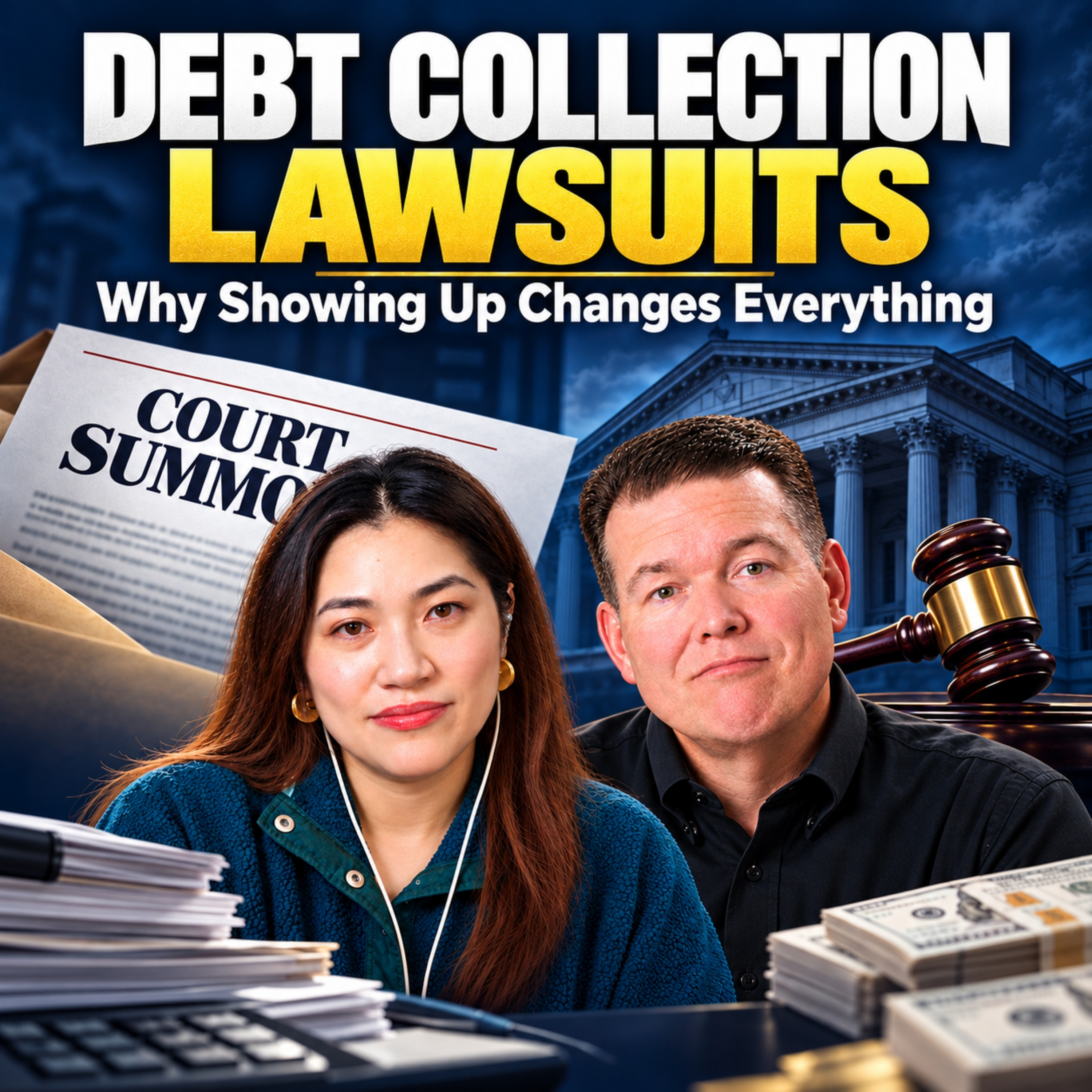
What would you do if a court summons arrived for a debt you stopped thinking about years ago?
You might be thinking, "Ralph, it's a civil matter, not a criminal one. Can't I just ignore it?" Nope. That reaction is exactly what debt collectors are counting on.
Who Is Suing You Now
Companies like Encore and Portfolio Recovery Associates buy old debt for pennies on the dollar. Medical bills, credit cards, whatever they can get.
Then they go to work on you.
Delinquencies are near their highest since the 2008 financial crisis, and court filings are back above pre-pandemic levels. Encore's litigation collections are up 25% in a year. Portfolio Recovery is up 26%.
What a Default Judgment Really Is
Here is the part that gets me. About three out of four of these cases end in a default judgment.
That means the consumer never showed up.
I used to file these cases myself when I worked at a credit union in Delaware. We went to the Justice of the Peace Court, which is basically small claims. The member got a notice, and a lot of them blew it off because it wasn't a criminal thing. I would sit in that room with the judge, wait a couple of minutes, and then ask for the judgment. Whatever I asked for, I got.
The Golden Ticket
Once a collector has a judgment, it is like holding a golden ticket.
-
They can garnish your wages. In most states that can be up to 25% of your paycheck.
-
They can levy your bank account.
-
They can put a lien on things you own, like your home.
The amount can grow, too. Most loan agreements let the lender collect reasonable collection costs, which can add another 35% on top of interest. A $2,000 debt can turn into $2,700 before the interest is counted.
You Can't Argue Later
Once the judgment is entered, it is very hard to undo. You can't go back and say you disagree with the debt. The exceptions are narrow, like never being served.
The judgment also lands on your credit report. If you pay it, the report will say "paid judgment," and any lender will still see it.
Make Them Prove It
Never ignore a summons. Respond by the deadline.
Then make the collector prove the debt is yours. I always did my homework before I walked into court. I had the statements and everything the member signed. A collector who bought your debt from someone else may not have all of that.
I'm not an attorney, so check the rules in your state, but showing up gives you a seat at the table.
What to Do This Week
1. Open Every Letter
Court notices look boring on purpose. Open them anyway.
2. Put the Deadline on Your Calendar
Write down the response date the day you get the summons.
3. Pull Your Paper
Gather your statements and anything you signed, so you are ready to ask the collector to prove it.
Start With the Paper, Not the Panic
Nobody is judging you here. Life happens, and debts get sold and resold until you barely recognize the name.
Open the letter.
Mark the date.
Show up.
Join Us Live
Join us LIVE at becomingfinanciallyconfident.com/live
Have a question about debt, taxes, or any money topic? Send it in. No question is off limits.

Licensed Public Accountant
Ralph V. Estep, Jr. is a Delaware-based Licensed Public Accountant (LPA), author, rancher, and media host with more than 30 years of experience in finance, taxation, and small-business leadership. As the founder of Saggio Accounting+PLUS and the creator of the Ask Ralph Media network, Ralph helps entrepreneurs, creators, and everyday families replace money confusion with clarity, confidence, and practical next steps — without shame and without hype.
Ralph's work blends deep professional expertise with a coach's mindset and a communicator's heart. He has held leadership roles across public accounting, financial institutions, law firms, and technology organizations, bringing a rare combination of traditional accounting rigor and modern systems thinking to the people he serves. A graduate of the University of Delaware and Wilmington University (MBA), he is known for turning complex money topics into simple, repeatable frameworks that help people make wiser decisions and build lasting financial stability.
He is the host of Becoming Financially Confident, a live weekday show built on a single conviction: most money stress is not a character problem but a systems problem, and shame is what keeps people from fixing it. The show grew out of Financially Confident Christian, which Ralph hosted for more than 1,200 episodes across eight seasons and earned national recognition. The new show offers the same host and the same feed, opened up to a wider audience.
Through Ask Ralph Media, Ralph hosts several other programs. Grit and Growth Business… Read More

Banks vs. Credit Unions: Why the Difference Matters