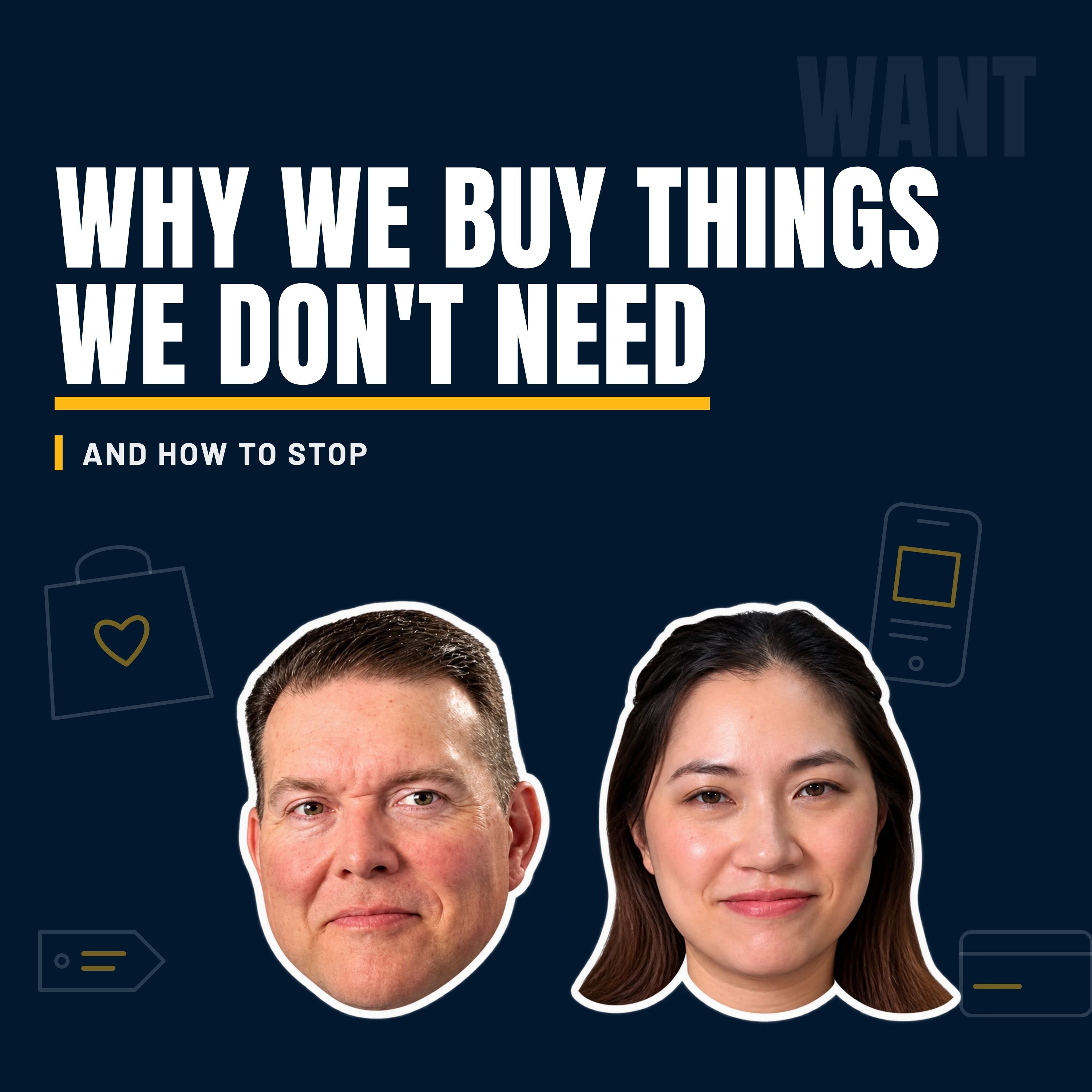
Emotional Spending: Why We Buy Things We Don't Need and How to Stop
Have you ever had a bad day and suddenly found yourself shopping for something you didn't need?
That happened to me recently.
I was having a difficult weekend and started looking at upgrading my iPhone. I compared models, checked out new features, and almost convinced myself to buy one.
There was just one problem.
My current phone worked perfectly fine.
So I stopped and asked myself: Do I actually need a new phone, or am I just trying to feel better?
That question helped me recognize something important about emotional spending, and it's one of the conversations Juliet and I had on this episode of Becoming Financially Confident.
When Shopping Becomes an Emotional Response
Sometimes, we spend money because we're stressed, frustrated, bored, or looking for something to make us feel better.
That's what I realized during my weekend of iPhone shopping.
I didn't need a new phone. I was dealing with difficult emotions, and buying something new seemed like an easy way to lift my mood.
Here's the problem with that.
Just because you can afford something doesn't mean you need to buy it.
There's nothing wrong with treating yourself. But when shopping becomes a way to handle difficult emotions, the excitement usually fades while the original problem remains.
Recognizing that difference can save you from purchases you'll later regret.
Three Questions to Ask Before an Impulse Purchase
That experience reminded me of three questions worth asking before spending money.
1. What am I feeling right now?
Are you buying something because you genuinely want or need it? Or are you stressed, frustrated, or trying to distract yourself?
2. What problem will this purchase solve?
My phone already did everything I needed. A newer model would have been nice, but it wouldn't have solved a real problem.
3. Would I still want this tomorrow?
Give yourself time before checking out. Sometimes, waiting a day is enough to separate a genuine need from a temporary feeling.
For me, those questions made the decision simple.
I didn't buy the phone.
And I'm glad I didn't.
Should You Close a Credit Card After Paying It Off?
Another listener shared a different financial dilemma.
After nearly two years, she finally paid off $5,000 in credit card debt. Now she wants to close the account to avoid using it again.
The catch? It's her oldest credit card.
Closing it could affect her credit score, especially if it increases her credit utilization ratio. But keeping it open could also create a temptation to spend.
My advice is to consider both sides.
If you can manage the temptation, keeping the account open while removing the card from everyday use may be an option. Just monitor it for activity and any fees.
If keeping it open puts you at serious risk of falling back into debt, protecting your financial progress may matter more than preserving a few credit score points.
Staying out of debt matters more than chasing a perfect credit score.
I'd also encourage putting some of those former credit card payments toward emergency savings.
That way, when an unexpected expense comes along, you have another option besides borrowing money.
Is a $2,200 Repair Worth It on a $3,000 Car?
One listener asked whether it made sense to spend $2,200 repairing a paid-off car worth about $3,000.
At first, that sounds like a bad deal.
But I wouldn't make the decision based on the vehicle's value alone.
I'd want to know how much longer the car could last after the repair and what replacing it would actually cost.
A replacement might mean monthly payments, higher insurance premiums, and additional maintenance expenses.
Before deciding, I'd ask:
-
Will the repair make the car dependable again?
-
Are more expensive repairs likely?
-
What would a reliable replacement actually cost?
-
Can a trusted mechanic provide a second opinion?
If $2,200 buys several more years of reliable transportation, the repair might make sense.
If the car is likely to need another major repair soon, replacing it could be the better choice.
The cheapest option today isn't always the most affordable option long-term.
How Should an LLC Owner Pay Themselves?
We also heard from a landscaping business owner who wasn't sure whether to pay himself through payroll or take owner draws.
This is a common question I hear as an accountant.
The first thing to understand is that having an LLC doesn't automatically determine how you're taxed.
A single-member LLC is generally reported on the owner's personal tax return for federal income tax purposes unless a different tax classification is elected.
An LLC taxed as an S corporation follows different compensation rules.
Before changing how you pay yourself, make sure you understand your business's tax classification and payroll obligations.
I recommend reviewing your situation with a qualified tax professional rather than copying what another business owner does.
The right approach depends on how your business is structured and taxed.
Your Money Move This Week: Finish the $250 Challenge
We're entering the final week of our $250 savings challenge, and I want to encourage you to finish strong.
You don't need a major lifestyle change to find extra money.
Start with a few simple opportunities:
-
Cancel subscriptions you rarely use.
-
Sell items you no longer need.
-
Try a no-spend day.
-
Review storage fees and other recurring expenses.
-
Put any extra money toward your savings goal.
Even if you don't reach the full $250, every dollar saved is progress.
The goal isn't just to save money this week. It's to build habits that help you keep more of what you earn.
Financial Confidence Starts With Better Decisions
Looking back, I could have bought that new iPhone.
I probably would have enjoyed it, too.
But buying it wouldn't have changed what I was feeling that weekend.
And that's what I want you to remember.
Financial confidence isn't about making perfect decisions. It's about understanding why you're making them.
Whether you're considering a purchase, deciding what to do with a credit card, or facing an expensive car repair, give yourself time to understand your options.
Think about the trade-offs. Ask questions. Make decisions that support your long-term goals.
Sometimes, the smartest money decision is the purchase you choose not to make.
And sometimes, it's knowing when spending money is actually worth it.
That's what Juliet and I want to help you figure out on Becoming Financially Confident.
Now, I'd love to hear from you.
Have you ever almost bought something just because you were having a bad day? Or are you facing a financial decision you'd like us to discuss?
Send Juliet and me your money questions, stories, and feedback.
Let's keep building financial confidence, one decision at a time.

Licensed Public Accountant
Ralph V. Estep, Jr. is a Delaware-based Licensed Public Accountant (LPA), author, rancher, and media host with more than 30 years of experience in finance, taxation, and small-business leadership. As the founder of Saggio Accounting+PLUS and the creator of the Ask Ralph Media network, Ralph helps entrepreneurs, creators, and everyday families replace money confusion with clarity, confidence, and practical next steps — without shame and without hype.
Ralph's work blends deep professional expertise with a coach's mindset and a communicator's heart. He has held leadership roles across public accounting, financial institutions, law firms, and technology organizations, bringing a rare combination of traditional accounting rigor and modern systems thinking to the people he serves. A graduate of the University of Delaware and Wilmington University (MBA), he is known for turning complex money topics into simple, repeatable frameworks that help people make wiser decisions and build lasting financial stability.
He is the host of Becoming Financially Confident, a live weekday show built on a single conviction: most money stress is not a character problem but a systems problem, and shame is what keeps people from fixing it. The show grew out of Financially Confident Christian, which Ralph hosted for more than 1,200 episodes across eight seasons and earned national recognition. The new show offers the same host and the same feed, opened up to a wider audience.
Through Ask Ralph Media, Ralph hosts several other programs. Grit and Growth Business… Read More
Why Credit Card Debt Keeps Coming Back