
Why Your Car Insurance Keeps Rising Even When You Do Everything Right

Your driving record hasn't changed. Your car hasn't changed. Your premium went up anyway, and that's not a coincidence, it's how the math works right now. On today's episode we dig into that one first, then answer four more money questions listeners have been asking: a student loan discount with a deadline, a new health insurance rule with real teeth, whether delivery driving actually pays, and what buy now, pay later is quietly doing to people who stack it.
Quick take
- Average full coverage car insurance is now $2,237 a year, driven partly by repair costs running 45% higher than last year
- A 1% student loan interest discount for autopay enrollees expires September 30, 2026, and only about 4 in 10 eligible borrowers have signed up
- A new 2026 rule removes the cap on how much you may owe back if your health insurance marketplace subsidy was based on an income estimate that turned out too low
- Delivery driving side hustles can pay as little as $6 an hour once mileage costs, self-employment tax, and insurance gaps are factored in
- Buy now, pay later rarely builds credit, but stacking multiple loans is a real and growing risk
Why did my car insurance go up if I didn't do anything different?
Average full coverage premiums sit at $2,237 a year now, up just 1% on paper. That number is misleading though, because the real story is repair costs. Parts and labor are running 45% higher than they were a year ago, and insurance works by spreading risk across every driver a company covers. When repairs get more expensive across the board, everyone's rate climbs, even the driver who hasn't filed a claim in a decade. If you want to push back, pull your declarations page, get three quotes with identical deductibles and coverage limits, and only raise your deductible if you actually have that cash sitting somewhere in case you need it.
Is the 1% student loan discount worth signing up for?
Yes, and it's worth acting on soon. Borrowers who enroll in autopay by September 30, 2026 get a 1% interest rate cut, up from the old quarter point discount, and it holds through June 30, 2028. On a $30,000 balance, that's $300 a year back in your pocket, close to a full monthly payment. Only about four in ten eligible borrowers have signed up so far, which is strange given how little effort it takes. If you're already on autopay, you're covered. If not, enrollment takes about four minutes. Set your autopay date two days after payday so you're not risking an overdraft just to grab a discount.
What changed with health insurance marketplace subsidies in 2026?
Starting in 2026, the cap on how much subsidy you might have to repay is gone. If your actual income lands higher than what you estimated when you signed up, you could owe back the full amount, with no ceiling. Subsidies depend on staying under roughly 400% of the federal poverty level for your family size, and that line is unforgiving. Cross it by even a dollar and you can be on the hook for everything you received, which for some families means thousands of dollars. The fix is simple even if the stakes aren't: update your income estimate at healthcare.gov the moment your income changes.
Is delivery driving actually worth it as a side hustle?
Run the actual numbers and it often isn't. Take a five hour DoorDash shift that brings in $110 for 95 miles driven. At the IRS standard mileage rate of 78.5 cents per mile, that mileage alone costs about $73.32. Add self-employment tax and that $110 shift nets around $30.87, which works out to about $6.17 an hour. Below minimum wage, once your car is doing the math with you. Delivery apps generally aren't covered by a standard personal auto policy either, and many require your car to be under about 10 years old. It can still work in dense metro areas with short trips, but track your real numbers before you assume the app is paying you what it looks like it's paying you.
Does buy now, pay later help or hurt your credit?
For most people, it does neither. These short-term loans usually aren't reported to the credit bureaus at all, so paying on time doesn't build anything. The real risk is stacking, taking out several loans at once until the payments overlap in a way you didn't plan for. A 2026 survey found 63% of buy now, pay later users had multiple loans running at the same time, averaging 9.5 loans a year. Most of those borrowers, 61%, were already at subprime or deep subprime credit tiers. More than a quarter paid late, and 11% ended up overdrafting their bank account trying to keep up. That last number is the one that should worry you. An app built to make purchases easier is pushing over a tenth of its heavy users into overdraft.
Got a money question? Send it to becomingfinanciallyconfident.com and we may answer it on a future episode.
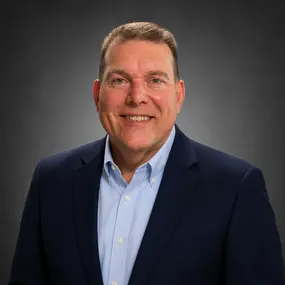
Licensed Public Accountant
Ralph V. Estep, Jr. is a Delaware-based Licensed Public Accountant (LPA), author, rancher, and media host with more than 30 years of experience in finance, taxation, and small-business leadership. As the founder of Saggio Accounting+PLUS and the creator of the Ask Ralph Media network, Ralph helps entrepreneurs, creators, and everyday families replace money confusion with clarity, confidence, and practical next steps — without shame and without hype.
Ralph's work blends deep professional expertise with a coach's mindset and a communicator's heart. He has held leadership roles across public accounting, financial institutions, law firms, and technology organizations, bringing a rare combination of traditional accounting rigor and modern systems thinking to the people he serves. A graduate of the University of Delaware and Wilmington University (MBA), he is known for turning complex money topics into simple, repeatable frameworks that help people make wiser decisions and build lasting financial stability.
He is the host of Becoming Financially Confident, a live weekday show built on a single conviction: most money stress is not a character problem but a systems problem, and shame is what keeps people from fixing it. The show grew out of Financially Confident Christian, which Ralph hosted for more than 1,200 episodes across eight seasons and earned national recognition. The new show offers the same host and the same feed, opened up to a wider audience.
Through Ask Ralph Media, Ralph hosts several other programs. Grit and Growth Business… Read More

Should You Keep a Secret Account? A Banker's $23,000 Lesson