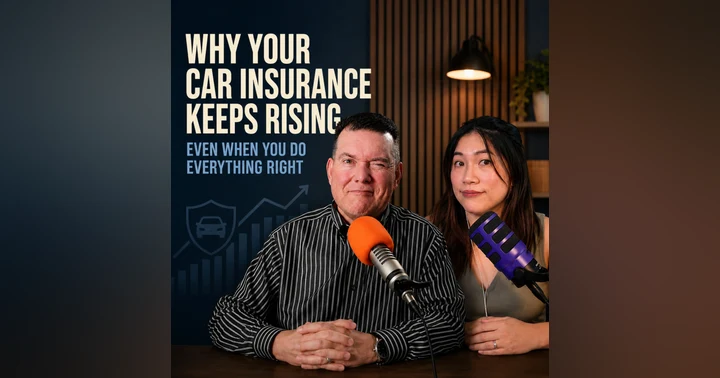
Student Loans, Rising Car Insurance, and a Health Insurance Trap


 Apple Podcasts
 Spotify
 YouTube
 Rumble
 Podurama
 Amazon Music
 Key Takeaways
- Student loan borrowers can claim a 1% interest rate discount by enrolling in autopay before the September 30th deadline, potentially saving hundreds of dollars a year.
- Car insurance rates are rising due to increased repair costs for parts and labor, even for safe drivers who have not filed any claims.
- Your insurance renewal is not a verdict; it is an offer, meaning you should shop around for three comparable quotes to lower your premium.
- If you purchase health insurance through the marketplace, failing to update your income estimate can result in owing thousands of dollars in subsidies at tax time.
- Beware of AI-generated scam websites mimicking utility bill-pay pages by carefully checking URLs before making any online payments.
I found out this week that fewer than half of us have claimed a 1% discount that's sitting on our student loans right now, my car insurance keeps climbing even though I haven't had a single claim, and one of my own clients once owed the IRS $18,000 because of a health insurance rule almost nobody knows about.
Visit our website: https://www.becomingfinanciallyconfident.com
This is today's episode of Becoming Financially Confident, airing weekdays at 11:30 AM Eastern.
I'm Ralph Estep Jr., a licensed public accountant with 30 years in the business, and I'm joined by my cohost Juliet.
On today's show:
- That 1% student loan discount expires September 30th, and I walk through exactly how much it's worth and how to set up autopay without getting hit with an overdraft
- Why my own insurance costs keep rising even though nothing about my driving has changed, and the exact script I use to shop three quotes the right way
- A hard lesson from my own office: a client who owed $18,000 in health insurance subsidies he didn't realize he'd have to pay back, and the one thing you can do at healthcare.gov today
- Why I told my own team "don't do it" when we talked about delivery driving side hustles, and the real numbers behind why it can pay as little as $6 an hour
- What buy now, pay later actually does to your credit, and the statistic that surprised even me
Watch or join us live at https://www.becomingfinanciallyconfident.com/live.
Links mentioned in this episode:
Stamps.com affiliate - https://www.becomingfinanciallyconfident.com/stamps
Quicken Simplifi affiliate - https://www.becomingfinanciallyconfident.com/quicken
WalletHub affiliate - https://www.becomingfinanciallyconfident.com/wallet
Health insurance marketplace - https://www.healthcare.gov
Equifax - https://www.equifax.com
Experian - https://www.experian.com
TransUnion - https://www.transunion.com
Frequently Asked Questions
How do I get the 1% student loan discount?
You can secure a 1% rate reduction on your federal student loans by setting up automatic payments before the September 30th deadline.
Why is my car insurance going up if I haven't had an accident?
Car insurance rates are rising across the board because vehicle repair costs, including parts and labor, have increased significantly over the last year.
What happens if my income changes while using the health insurance marketplace?
If your income increases beyond your estimate, you may have to repay the financial subsidies you received when you file your taxes.
How can I avoid utility bill payment scams online?
Always verify the exact URL of your utility company and avoid clicking on sponsored search results that may lead to lookalike scam websites.
00:00 - Untitled
00:23 - Understanding Financial Surprises
00:29 - Understanding Buy Now, Pay Later and Financial Confidence
08:56 - Understanding Insurance Premiums and Deductibles
17:53 - Understanding Health Insurance and IRS Implications
26:02 - Understanding the Risks of Delivery Driving
33:46 - The Reality of Delivery Driving
40:11 - Understanding Buy Now, Pay Later Mechanisms
48:23 - Navigating Credit: Understanding the Impact of Buy Now, Pay Later
56:44 - Transitioning to Financial Confidence
Juliet Chuang
Today, there's a 1% rate cut sitting on your student loan right now, and the window to claim it closes September 30th. Plus, why did your car insurance go up when nothing you did changed? And a health insurance surprise that shows up in April instead of right now.Then we're going to talk about is delivery driving actually worth it? Once a year car and the taxes come out. And what is buy now, pay later?Does splitting a purchase into four payments help your credit hurt it or neither? Stick around. At least one of these things is already in your account. Welcome to becoming financially confident. Breaking free from money Shame.One conversation at a time. When we're live every Monday through Friday from 11:30am to 12:30pm Eastern.
Ralph Estep Jr.
Well, good day, everybody. I'm Ralph Estep Jr. I'm a licensed public accountant. And yes, I've got 30 years of experience, and I'm looking forward to a great conversation today.
Juliet Chuang
Me, too. I am Juliet. I'm just a regular person who's going to be asking Ralph all the questions because if I have them, I think you do, too.
Ralph Estep Jr.
Yeah, we're two very different people having conversations about the things that affect our money and your money. Now, I'm going to set a couple house rules because and if you listen to us the last few days, I want to make sure we all go by these.We're not here to shame anybody. We're not here to shame anybody about money. Nobody's going to be judged for what they didn't know. What happened yesterday happened yesterday.And our goal every day is to help you build a brighter future and not suffer from that stress you've been.
Juliet Chuang
In in the past for sure. And I mean, you guys know this. This is a live show. We definitely want to have that conversation with every single one of you guys.So if you have a question that you want us to talk about, send it to us@becomingfinanciallyconfident.com no question in regards to finance, at least is off limits.
Ralph Estep Jr.
Yeah. And listen, wherever you are on your financial journey, I want you to understand this. You're not alone in that.And let's get right into to today's headlines.
Juliet Chuang
Like we mentioned earlier, you may have a chance to knock 1% off your student loan interest rate. And it only takes about four minutes to apply, but fewer than four in 10 borrowers have done it. That's 40% of you guys.And the deadline is September 30th, coming soon. So, Ralph, is 1% actually enough to make a meaningful difference?
Ralph Estep Jr.
Oh, yeah. You know, I love 1%. Because if you think about it like this, let's say you've got $30,000 in student loans. One percent is $300 a year.That's a big deal. So you have to understand what we're talking about here. There's been a big change to the student loan dealer, and this became effective on July 1st.And basically what we're talking about here is if you set up autopay, you know, where they take the money from your account automatically. It used to be you'd get a quarter of a percent off if you do it now, you get 1% off. Now, here's the deal.You gotta enroll by September 30th, and it runs through the next June 30th, 2028. If you're already enrolled, do nothing. You're in good shape. Now, this 1%, like you mentioned, isn't a rounding error.Like I said, on a $30,000 balance, that's $300 a year, that could be as much as a whole payment. So you want to make sure you do this.
Juliet Chuang
Yes. So what happens if the overdraft overdraws my account, though, as I'm paying off my loan?
Ralph Estep Jr.
Oh, yeah, that's a big issue. And a lot of people fear. You know, it's interesting. Been doing this for a long time.A lot of people fear having things set up automatically to come out of their account. I actually think it's a great thing. So here's one takeaway you can do today.Set that to be 22 days after your payday, because what happens most of the time, we're actually going to talk about this in the next couple weeks. We're going to talk about overdrafting and all that sort of thing, because it happens to all of us. Trust me, I've been there, done that.But set it up. Be a couple days after your payday. That way you don't get stuck in that trap where you make this payment.You're trying to save 1%, but they nail you with overdraft fees, and you get stuff returned all over the place. So that's just a little tidbit as we move into that.
Juliet Chuang
Actually, I have a question for the audience. I know this is completely live. I just have a question for the audience. How many of you guys actually pay your bills manually versus autopay?Because I'm thinking it might be a useful conversation in the future for everybody. Who gets paid, I don't know, every two weeks or so, but they have a lot of bills.What is the money mindset or how can people actually navigate to setting auto pay without overdrafting?
Ralph Estep Jr.
And Julia, let me ask you a question because I'm going to go into a little personal information here. Do you think that is an aged based thing? Because what I see is I have a lot of elderly clients.And a lot of my elderly clients, like, oh, you know, you don't take it from my account directly. My younger clients are like, here, here's my information. Just do it. I feel like there's almost like a little bit that goes into that.
Juliet Chuang
That's such an interesting question. I think one, I will say I'm a millennial. So I'm like right in the middle, actually. I do maybe 90% of my bills. Auto, auto pay.But then maybe like 10% of bills, I pay manually, which is weird. But even my parents, who are older generation, they do auto pay, everything.What's weird is like I have friends and younger people, they do mobile banking, everything, which I had to get on board with over the last couple of years. So I think slightly generational, but then also just talking about the comfort of technology and using that.
Ralph Estep Jr.
Well, yeah, and it's interesting you say that because I don't think I've been into my bank now. I use a credit union. I don't think I've stepped foot in the actual bank building or the credit union building for five or six years.I just haven't had any need to go there.
Juliet Chuang
Interesting.
Ralph Estep Jr.
Well, you want to move on to our second headline today?
Juliet Chuang
Let's do it.
Ralph Estep Jr.
Let's do it.
Juliet Chuang
So your car insurance is still going up, but nothing you think you did changed. You didn't wreck your car, you didn't get a ticket. You didn't get more dangerous this year, driving. So, Ralph, what is happening?If it's not me, what's causing my prices to go up?
Ralph Estep Jr.
You know what comes to mind? It's not you, it's me.
Juliet Chuang
Isn't that kind of the thing almost all related to personal finance? It's almost always not you.
Ralph Estep Jr.
Right. You know, and the thing that's interesting about this is this is just tracking with everything in the economy.
Juliet Chuang
Yeah.
Ralph Estep Jr.
Right. Now, full coverage. Listen to this. I was kind of floored when I saw this. Now, full coverage. Now, this is an average number is $2,237 a year.That's up 1%. Here's what that's really driving this. The cost of getting your car repaired, parts and labor is 45% higher this year than it was last year.So the insurance companies have to look at that. Because that's why, even if you don't have any claims, if you're doing all the right things, you're a defensive driver. You do all the right things.When you're on the road, your rates are still rising because it's a pulled risk. Let me explain what I'm talking about then. When you have an insurance policy, the insurance company is pulling all the risks together.They've got to insure Juliet. They got to insure Ralph and Sally and Bob and Bruce and all these people. Now, maybe Juliet is a little crazy on the roads.Now, I'm not saying that's you, Julia, but maybe you're a little crazy on the roads. So they've got to factor in that Juliet maybe doesn't have the best driving record. Now, Ralph and Bruce might have great, but somebody else doesn't.So they got to pull that all together. So you're paying the body shop invoice for other people by paying your insurance. It's just the way insurance works.So that's one thing that even though you could say, well, you know, I've been doing all the right things, I mean, there are definitely things that you can do, and, you know, if you want, we can talk about that for a second, but there are definitely things you can do. As you're seeing these rates go up,.
Juliet Chuang
I have a quick question. I just want to understand a little bit more about insurance.As they're pulling Ralph, Juliet, Sally, and Bob together, do they separate us and out into, like, age groups or any. Any other ways to almost, like, minimize the risk within each subgroup? Is that possible?
Ralph Estep Jr.
Well, absolutely. And the insurance companies are looking at that. They're looking at the. What they would call their population.And in their population, they've got elderly people, they've got this person and that person, and they do it by zip code. They do it by how many miles you drive. They're doing all those things.But just because of the nature of insurance being a pooled thing, it's always going to be. Health insurance works the exact same way. Yeah, all of these things are pooled interest.Homeowners insurance, renters insurance, all work the same way because you may never have a claim, but you pay in every year. But then you might have that unlucky person down the road. It seems like every time this. We had a bad storm come through here last night on the farm.We've got some trees down, so you could be the unlucky one that always gets hits with those trees down.
Juliet Chuang
Got it. Well, let's bring it Back to the individual.Like if their car insurance premium went up, what is something that each person can do to minimize that payment but still get insurance as much as possible?
Ralph Estep Jr.
Are you ready for the sound bite of the day? Because I'm getting ready to drop it.
Juliet Chuang
What is it?
Ralph Estep Jr.
Your renewal is a price. It's not a verdict, it's an offer. The insurance company is offering to give you insurance for this much. So pull your declarations page.We talked about that a little bit the other day. Declarations page basically shows, here's the different coverages you have.Write down your limits, write down your deductibles, and go shop it around. Go get three quotes, but make sure you're shopping for the same thing. That's one thing a lot of people get tied up on.Make sure your deductibles are the same, your coverages are the same, because you can compare insurance A, insurance B, and insurance C, but they might be quoting you different deductibles, they might be quoting you different limits of coverage. So make sure you have all of those things in line. Now, let's say that you do that and you still don't see that there's any savings.One more thing you can do is you can raise your deductible. So most people set their deductible at 500 or $1,000, right? True story. My youngest son, he waited a little bit longer to drive.He ended up having an accident, and his insurance was skyrocketing. So he says to me, dad, he says, what do I do? I said, you can increase your deductible, but here's what you better realize.What that basically means with a deductible is if you get in an accident, even if it's not your fault, you're going to have to pay the first amount of that to get paid. So his particular deductible was $1,000.And he said, well, I called the insurance company, dad, and they said, if I raise my deductible to 2,500, then my interest, my insurance cost goes down.I said, yes, that's true, but if you get in an accident, you better have $2,500 sitting in your emergency savings account, because your truck or cars, me sitting on the side of the road until you can afford to get it fixed. So raise your deductible only if you hold that amount in cash and you're ready to do that.But run the numbers, because sometimes even increasing your deductible doesn't really give you that benefit that you thought it was going to give you, in other words, from 500 to 1,000 might save you 20 bucks a year. That's when you got to really think, is it worth it?
Juliet Chuang
Yeah. I mean, I never thought about. Okay, if you raise the duck, first of all, I didn't know you could do that.And then that's also such a really good reminder. Make sure you have that in cash just in case something does happen. Right. It doesn't have to be an accident.It could just be wear and tear and then, you know, all that.
Ralph Estep Jr.
Yeah.I want to read a couple comments we have out here because I see PR Shield put I'm Gen X and we pay as much as possible via a credit card so that we can get the points. But I can imagine that being problematic. Yeah, I agree. You know, that's great.If you want to pay all your bills with a credit card, just make sure you're paying that bill every month. Month. And then Dutchess, and I'm going to get it right this time. This is Dutchess of New Jersey, and she says going to the bank is ponderous.And I agree. And then when we would talk about insurance, she said comparing apples to apples is super important.And a lot of people don't realize that because you get on the phone with this company trying to give you an insurance quote and they're telling you the deductible is different and all that sort of thing. So one more comment here from Infor Seeker.It says, I have some things that I pay all auto, but others I pay manually so I can choose which paycheck I want to pay what bill with. Usually it's always the same, but sometimes I need flexibility. Great point. I think that is a very good point.It's all about being intentional with your money.
Juliet Chuang
Yeah.Before we go into the next headlines, I do want to invite you guys, any of the audience members, if you're going to shop your car insurance recently and you really want us to crunch the real numbers live, drop us a comment. I know. Send us an email on becoming financially confident.com or leave us a comment at any of the platforms that you're watching.This and let's do it.Because I hear what you're saying, Ralph, but I'm one of those people who I need to have an actual example to work through and then my brain will start connecting all of those dots. So.
Ralph Estep Jr.
No, I totally get it. I totally get it.
Juliet Chuang
Yeah.
Ralph Estep Jr.
Well, how about we go on to the next headline for today?
Juliet Chuang
Yes. If you get help paying for your health insurance through the marketplace and your income changes this year, there's one thing you really want to do.Update your income estimate. That's because the amount of financial help you get is based on your expected income.And starting in 2026, there's no longer a cap on how much of that subsidy you may have to pay back if you end up earning more than you estimated. Ralph income estimate. I see this so many. Not just on, like, the marketplace, but I also get it on, like, credit card sometimes.They'll frequently be like, hey, let's check in. But why is updating that income estimate specifically for the marketplace so important this year?
Ralph Estep Jr.
Oh, this is a huge one. And I'm gonna give you a war story about this. So I guess it's been about 10 years ago when the whole Affordable Care thing started. I had a client.They signed up for the marketplace because they didn't have insurance. And when they called the marketplace, the marketplace asked you a couple questions. You know, how many people are in your family? What is your age?How much money do you make? And he really didn't understand how much money he made. So fast forward to tax time.So the whole reason this is an issue is because of Affordable Care. The reason they ask you for your income is they will give you help throughout the year to pay your insurance premiums.The idea, it's a prepaid credit. Well, then when you file your tax return, you got to sort of balance this up.What happened in his case is they basically will give you that credit up to a certain amount. I'm going to lose you in the minutiae. But it's basically 400% of the poverty level of income.So if you have a family of four, they figure out what your poverty level income multiplied times four. You can make no more money than that. Well, this particular client ended up landing a great job and ended up being over that number.
Juliet Chuang
So he came into no longer qualified for poverty income.
Ralph Estep Jr.
Correct. So he was outside the. And it's like a trap door. Once you go $1 over, you're done. So comes in, sits down to get his taxes done.And we're plugging in all the numbers. And I said to him, so you got $18,000 last year in healthcare subsidies. You didn't qualify for any of those.So now you owe $18,000 on your tax return because you got these premium credits all year that you weren't entitled to. And he broke down in my office. I mean, this is a grown man crying. And I get it.Because he didn't have $18,000 he had affordable insurance that he couldn't afford. Now, what happened for several years, the Congress and the folks in Washington decided to not claw back that all at once.They said, well, because of COVID because of this, we're not going to do that. So they kind of let that go. But that's going away now. And nobody knows about this.This is a big deal when you apply for health insurance through the marketplace. Now, if you're covered by your employer, this doesn't affect you. This is not what we're talking about.These are people who aren't covered by an employer. Or your employer says, go get your own insurance. We can reimburse you, that sort of thing.So if you're buying it through the marketplace, when you go online or you call somebody, they ask you for your income. The reason they're asking you for your income is they're going to base your subsidy on that income.Well, if you're wrong on your income, when somebody like me or you do the tax returns at the end of the year, you may get bit and this bites the person who did everything right, but the person who went out and got that second job, or maybe they got a raise at work, like I said, these are people that are doing all the right things right, and it's a big deal. So what can you do to do this? Number one, update your income estimate@healthcare.gov that is super important.Second thing, I tell a lot of clients, and this is a tough.This is a tough love thing, go get the health insurance marketplace, but tell them your income is actually higher by twice what it really is, because then. Let me explain.So then they're gonna not give you the subsidy you're entitled to, which means you're gonna have to pay more for your insurance throughout the year. But you don't have that fear come tax time that you're going to owe.Now, if your income falls down below that number where you qualify, then I've got bonus money for you at tax time. And then you're smiling on the way out of Ralph's office because now you' a bigger refund. You get the credit either way based on your income.The question is, do you want to put, you know, kind of go to the casino and say, well, I'm hoping that this number isn't too much versus oh, there's a bonus for me. I understand it from both sides, though, because I've had clients say to me, ralph, I can't afford these premiums every month. I need the subsidy.And I. And I've actually advised clients. I say that's fine, but just realize, tax time.You and I are fixing to have a discussion, and you're going to owe some money. So just be prepared for that. It might be a bridge for them till they get the next job or something like that.Now, it looks like you might have some questions for me there, Juliet.
Juliet Chuang
I do. Okay, so, like, in this $18,000, right? Like, in that scenario, did he just pay it off all at once? Because $18,000 is a huge amount.
Ralph Estep Jr.
Yeah, it was brutal, and it caused so many problems. We're gonna be talking about this next week, you know, because it affected his marriage, it affected his home. I mean, big deal.And, no, what he ended up doing was he ended up having to file. So I told him to file the tax return, making sure he's in compliance. We didn't want him to get in trouble for not filing.He ended up having to go into a monthly payment plan with the irs, and he may still. He's not a client anymore. He may still be paying that, because the IRS basically. But here's the problem.You got to understand, Juliet, the IRS does not want to be a lender. They will lend you money, but they charge you interest. They charge you penalty from day one. You do not. They are a lender of last resort. Oh.Sometimes you have no other choice, but. And listen, I'll be honest with you. The accountant's gonna talk. When I was younger, started my career with a young family, there was.There were tax years where I owed at the end of the year. And I just. I considered it like a line of credit. I had my line of credit with the irs.
Juliet Chuang
Right.
Ralph Estep Jr.
Looking back at it now, man, I was getting nailed with penalties. I was getting nailed with interest. Not a smart move for somebody who's an accountant. So to answer your question, there are things.They're not going to come lock you up.They're not going to put you in jail, but they are what's called a preferred creditor, which means they can attach your wages, they can file liens against your home, they can pull your passport. If you owe them more than $50,000, they can pull your passport so you can't travel overseas. Oh, yes, it's a big deal.But on the same token, the IRS will work with you. They want you to pay them. So as long as you're paying them, you're doing the right things, you can get away from this. But. But it's.It's a brutal thing when it happens. And that's why I thought it was so important to talk about that today.
Juliet Chuang
Yeah. So let me just recap from like what I retained from this one.So if you are getting health insurance from the marketplace, it's super important for you to update your income on healthcare.gov and then the last thing, which is additional knowledge is IRS is going to be the last person you want to.
Ralph Estep Jr.
Be borrowing money from the lender of last resort. You can forget that. Yeah, it's just, it's not a good choice.
Juliet Chuang
Good to know. Good to know.
Ralph Estep Jr.
Well, let's move on to our fourth and final headline. What do you think?
Juliet Chuang
Yes, let's go. So now we're talking about paying bills. Like you went to go pay your electric bill.You search for the company's name, clicked on the first result and then you paid. But your electric company never got a dime. Ralph, this sounds like a scam to me and I'm not a fan of this. What's happening?
Ralph Estep Jr.
Oh yeah, this is a problem.So what we're talking about here, and this happens all the time because these scammers are building websites with AI and they look perfect because you can go out to any of these AI bots and say, hey, go look at my local utilities website. And I want you to build one just like AI.And they set up a domain that's almost the same, might have an extra letter, an underscore, a period, all those type of things. And unbeknownst to you, you got that bill sitting on your counter for the electric and you're like, oh, I got to go pay this electric bill.They're going to shut my electric off. So you go online, you do your Google search, you go and you find, oh, there's the item you click on.It looks like their official website, their official bill pay page. They take the money out of your account, but they didn't go to the right place. It's happening all the time. It's a word called sponsored or ad.And they're very slick how they do this. So you gotta pay attention to those things. If you're going to pay your bills online, which we talked about earlier, this is a great thing to do.Make sure you're going to the actual utilities website because there are scoundrels and scammers and rascals out there all over the Internet trying to take away your hard earned money.
Juliet Chuang
That's true. And I will just say this is super important. We all need to learn a little bit how searching on the Internet works.They're definitely going to be putting a lot of sponsored and ads above your actual search results. So that's one thing to know.And then also make sure you're typing in the right address, you're reading the URL link over and over again before you make anything, any payment. That's super, super important.
Ralph Estep Jr.
Yeah, it's absolutely vital.So one of the things that I recommend that you do is, is whenever you have any kind of bill or utility, create yourself a database of the actual websites. Save those in your shortcuts. However you do that, get their phone number in there so that if you need to call them, you have their phone number.Don't ever let it become one of those things where, oh, I'm just going to try to go out here online and search for it. And listen, I'm guilty of this. I got to be honest with you. There have been times when I was like, I got to go pay something.Let me just do a Google search. And it's a wonder I didn't catch myself in the same situation.
Juliet Chuang
Right. So, Ralph, just. We're gonna wrap this one real quick. But what's important is, what if somebody already paid?But it they paid a scam company, what can they do?
Ralph Estep Jr.
So there's a couple things you can do. Having worked in the banking industry for a while, you can dispute that with the bank and say that, you know, you were taken advantage of.Unfortunately, the bank's probably gonna say, but, yeah, you did it yourself. So chances are there's not a whole lot you can do. You can go to the ftc, the Federal Trade Commission, file a complaint. Very good thing to do.You can file with your local Department of Justice, because the more information we get out there, the more likely they're able to shut these clowns down. But just it's kind of the thing my grandmother used to say, buyer beware. And it's the same thing. Surfer, Internet searcher beware.Because these things are out there. Like PR Shield said, you know, those scammers are so sneaky. Excuse me, That's Duchess in New Jersey said that. Yeah, they're sneaky.And that's no joke. And she also made me post this comment, too. She said something else, and I always forget that I can post these. So I post these right here.And she said, I pay my utilities via their bill pay. Great idea. Really a great idea. And listen, while we're talking about that, this is a great time to talk about stamps.com.Now, stamps.com is one of our affiliates, and as we're talking about paying bills, maybe you're looking at your Desk right now, and you've got that stack. Everybody's got one. It's on the corner of your desk or it's in the passenger seat of your car. It's that mail to sending. You just haven't done it.You know that insurance form, that rebate that's expiring that contract? You need to get back to somebody who's waiting on it or that check to the county to pay your county property taxes. And here's why it sits there.Mail didn't go away. So many of us are used to doing email, you know, those type of easy things.And maybe we send six things a year instead of six things a week like we used to. Now, I'm fortunate we have a postage machine here at the office, but it's the issue that we got to figure out. How do we get that?So it's not enough to build a habit around. It's too many to ignore. So every single one of these cost you a separate errand.And that's where stamps.com comes in here, because it kills the errand. It kills it, and it kills a debt. Real UPS or United States Postal Service postage on your printer, on plain paper or a label.You can also use UPS and FedEx. You scheduled a free pickup. So the carrier comes to your door and it's gone. Now, here's the best part of our affiliate relationship with them.You get 30 days free to try it. Their basic plan is just $14.99 a month. And I'm gonna tell you straight, it's small. You get 25 stamps and 10 labels a month.If you mail more than that, you can go up to their $29.99 plan, which is unlimited. And that'll handle things like certified mail, which matters if you have to answer a letter and prove it.But if you're interested in stamps.com, you can go to our affiliate link. That's becomingfinanciallyconfident.com stamps again, that's becomingfinanciallyconfident dot com stamps. Now, this is an affiliate link.So the way this works is we earn a commission, but it doesn't cost you anything else to do that. So again, that's becoming financially confident.com stamps. And now we're going to move on to our next segment here.
Juliet Chuang
Today's side, Hustle Corner. We're going to talk about delivery driving. So your Uber driver, doordash, Amazon groceries. I think there's like a lot of grocery delivery driving.We're gonna see if this easy Side Hustle is actually gonna make you money and whether it is actually worth your time. So, Ralph, from your perspective, what is your initial reaction when thinking about delivery driving? Side hustle?
Ralph Estep Jr.
Okay, you ready? I'm gonna lay it out. Yeah, don't do it. I'm just gonna be honest with you. Like, I'm just being honest with you. It's funny, before.Before the show, I ran down the hall here, and one of the ladies that works for me, name is Renee, And I said, renee, we're side Hustles. Today we're going to talk about delivery driving. She goes, don't do it. And as you count. Well, I'm going to tell you why.Because we've seen it with our own clients. It is very difficult to make money in this now. There are people all over social media talking about, oh, this is great, you can make extra income.But what you'll notice, and this is a really interesting thing, none of the big apps ever post a dollar figure of how much money you can actually make.
Juliet Chuang
Yeah.
Ralph Estep Jr.
Which is a big issue. I'll give you an example of this.We went to a conference, actually, Julia and I went together in Charlotte, and I got an Uber ride back from the air or from the hotel to the airport. And it's kind of an interesting situation. I'm riding along with a friend of mine, Dave Jackson, from the school, podcasting.And we're riding along, and I'm a person that's gregarious. I like to talk to people. So I start talking to this Uber driver.I found out he had just moved from Delaware a couple weeks earlier, which was kind of cool. Like, go figure. Here I'm in Charlotte, North Carolina. But anyway, I said to him, I said, so how did you get into doing Uber driving?Which is kind of the same idea as food delivery. And he says, well, he says, there's an interesting story. He said, a couple years ago, I wanted a new TV for the Super Bowl.And he said, so my wife said, if you want a new tv, you got to get out there and hustle and make some money.
Juliet Chuang
Right?
Ralph Estep Jr.
I said, that's a great idea. It worked. But here's the problem with that. Does it really pay in the long run?And that's where I think we need to talk about today, because it really doesn't pay in the long run.
Juliet Chuang
Yeah.
Ralph Estep Jr.
They don't tell you about the wear and tear on your car.
Juliet Chuang
That's important.
Ralph Estep Jr.
It's a big deal because it feels like easy cash. Right. You're out there, you make a nose delivery. My son's done it with a friend of his and he's like, oh, dad, it was so. We had a great night.It is fantastic. We made all this cash. I'm like, okay, well, number one, son, you're not driving your car, you're driving your friend's car.How many miles are you putting on it? So that's the first thing, wear and tear on your car. Second thing, I'll put my tax hat on.They don't tell you that every net dollar you make you're going to pay federal, state, and a sneaky little thing called self employment tax. Because technically you're self employed. That's a number that's 15.2% in addition to federal and state tax. They also don't tell you this.Your insurance company generally will not cover you if you're doing this under your regular auto. We talked about auto insurance earlier.
Juliet Chuang
Oh, I didn't know that.
Ralph Estep Jr.
Yeah, this is no joke. Most auto insurance carriers will not cover you for this.Now I will tell you, having experienced this with some clients, the Ubers, the Lyfts, the doordashes. Oh, no, don't worry about it. Our insurance covers that. Get that in writing because I've never seen it play out like that.Yeah, so pick up the phone and call and say no, go ahead.
Juliet Chuang
Oh, I was gonna say, like, I mean, one of the biggest things that makes me feel like if you want to do delivery driving, you really have to consider it is figuring out that cost benefit analysis of the wear and tear on your car, how much maintenance is gonna cost, and also the insurance for it. Because it's not linear.You know, like I, I don't think that the amount of driving that you're doing and the amount that you get paid, that might be linear. But I also think These companies, Uber, DoorDash, they're definitely going to try to get drivers on the cheap. Right. So that's already low pay.And then the amount to maintain your car and the car insurance, that's actually much bigger. But I've also heard in the past, I don't know if they do it anymore.Like Uber and DoorDash, they used to have these programs where they, how does it, like lease cars to delivery drivers and then they, eventually the drivers can buy the car outright. Like, what is your opinion on that?
Ralph Estep Jr.
Well, and the other thing I didn't know about, and it goes along what you said, I didn't even know this. A client told me this a couple weeks ago. There is a. If your car is over a certain Age, they won't even let you drive for them.So you've got to have a car that's. Yeah, I was, I was surprised by this. I think it can't be more than, and don't hold me to this, 10 years old.So if you've got a 2015, you can't drive that for an Uber anymore. I think it's. A guy that we had from the airport actually told me. It's fascinating to me.
Juliet Chuang
I mean that kind of makes sense because like these companies, they do want to try to figure out how to protect themselves while still getting a huge amount of drivers.
Ralph Estep Jr.
Yeah. But I think what you were getting to is, does it really pay?Now if you are in a place where, if you're in a major metropolitan area where things are really close, you might be able to make a couple dollars from this because things are really close. But if you're in any kind of suburb place where, in the suburbs where there's places you got to drive, it just doesn't pay for it.I'll give you some examples. Let's say you did a five hour shift working for one of these doordashes. And let's say you collected $110, which that's not bad for five hours.It's about $20 an hour.
Juliet Chuang
Right.
Ralph Estep Jr.
But here's the thing you got to understand, you drove 95 miles for that.
Juliet Chuang
Right?
Ralph Estep Jr.
So you got to figure out what is the cost of the car. Now right now the standard mileage rate with the IRS is 78 and a half cents. So the IRS is already saying to drive 95 miles, it's costing you $73.32.So you made 110. Do quick math. I got enough fingers and toes for this 110 minus the 73.32. You've only got about $35 left over. Add on to that hour.
Juliet Chuang
Right.
Ralph Estep Jr.
For five hours.
Juliet Chuang
For five hours.
Ralph Estep Jr.
So for five hours we're about $32.35. Then you got to pay self employment tax. Self employment tax on that and it's based on the number is another $6.
Juliet Chuang
Yeah.
Ralph Estep Jr.
So now you're down to $30.87 that you've made for five hours of work. Divide. So, so yeah, take that $30.87 divide by five. That means you're making $6.17 an hour.This is the part that none of these delivery drivers ever think about. The companies don't tell you this. And here's the thing. Let's just say you made $140. That same time you have the same issue.I did the math for a particular guy. We figured out he was making $3.65 an hour for that whole shift. And I said, you could have went to McDonald's and asked, do you want fries with that?You could have went to Home Depot and got a job and made a lot more money. And that's the scary part. Is it worth $6 an hour? It's a big deal. And like I said, don't forget about that insurance gap. That's a big deal in this.It's no joke.
Juliet Chuang
Well, it's not likely for Uber or Doordash to go away because it's such a part of society these days. Right. So like, how I can tell you, Ralph, how I think about delivery?Like, if you do want to do this as a side hustle, it's really a short term side hustle, please, I would say don't think of it as a long term gig. What else would you say? Or like, maybe you have a different opinion than I do, but I don't think so.
Ralph Estep Jr.
As far as what, what I would think are better side gigs or like, because.
Juliet Chuang
Because people are still going to be delivery drivers. So, like, if you were going to become an Uber driver or doordash driver, what mindset would you advise these people to think about? Delivery driving.
Ralph Estep Jr.
I think it comes down to clarity and I'm going to talk about that on the show all the time. Understand the real numbers. Keep track of how much time you're putting into this. Keep track of repairs and maintenance and fuel and insurance.Really do the math and say, okay, I just made this much money. Because here's the problem. Everybody sees the gross number. Oh, I've got an extra $150 in my pocket. This is fantastic.But you haven't thought about number one, how much is the value of your time that you just lost? How many miles did you put on your car? How much wear and tear did you just put on your car?Did you have to pay an insurance, what they call a rider to your insurance? Insurance to make sure you're covered for these things? And then could you have gone and done something else?Could you have picked up an extra shift at work? Could you have picked up a second job doing something else?It might not be glamorous and it might not be as flexible, but I think there are better options.Another thing I'm going to tell you to do, number one, and this is the thing, it's a big deal as you're doing this, put A separate amount aside for taxes.So if you're going to do this right away, create a separate checking account, call it your tax account, and put 25% of whatever you make into that tax account. That way, when April 15th comes around and you're doing your taxes, you're meeting with somebody like me.It's not, surprise, surprise, we got a big problem here. Set that money aside. Now, you're probably saying, wait a minute, Ralph, but you already told me I'm not making much money.But that's going to be your little hedge. You can use it for two things. You can use it, number one, to pay the taxes.And number two, if you've got to go fix your car, you got to go put tires on your car, whatever those things look like, because this is wear and tear. The other thing I will tell you is, if you're not in a major metropolitan area, don't do it. I'm just going to be blunt, like, don't do it.You know, my oldest son did this. When he first joined the coast Guard, he went to Florida.It was during COVID and he did it for a grocery store, and he did really well with it because he lived a mile from the grocery store, and he only picked deliveries that were within five miles of the grocery store. So he would pick up the bags, take them to the person. And my son's also a hustler. He can move. He's not playing games.But he was very intentional about this. So I guess that's the other big takeaway for me, Juliet, is be intentional.If you don't hear anything else that I say today with any money decision, it all comes down to being intentional, because they're gonna sell you this thing. Oh, everybody's doing it.I see these people out picking up extra shifts, but I've had clients sitting in my office, and when I showed them the real numbers of how much money they actually didn't make, they were like, ralph, I gave away time with my wife. I gave away time with my family. I gave away what? All those other things to make $2 an hour. This makes no sense. It's a tough situation.
Juliet Chuang
Oh, I was gonna say, you talk about intention being very intentional, like, doing any kind of side hustle. I'm a like, bring it throughout everything that we're talking about. You know, we talked about the health insurance.If you're doing it through the marketplace, putting aside money, whatever it is, we should all be a lot more intentional with our money. And I'm saying this for myself, because that's that's why I'm here.I want to get better at my money and feel more confident about it along with everybody else. Yeah.
Ralph Estep Jr.
And I want to read some comments because you've got some great comments. Tied Tutoring said. Great information. Thank you, Ty. We appreciate that. PR Shield said. I'm not surprised that this is your advice.I feel terrible for people trying to make money with these delivery driving gigs. I agree with you. And it's like the people that can least afford it are the people who are being pulled into this because they need the money today.They need to go buy groceries for their family. And I have a heart for those folks. I really do. This is a tough situation because you're looking at it. I need the money right now.Dutchess put in just the cost of your vehicle. It's crazy. Absolutely. $6 An hour. And she says that's the 80s minimum wage. Yeah, that's right.But if you don't, if you don't do the math, if you don't break it down by that per hour, you're never going to see that. And clarity is how you can make better decisions. It really is.
Juliet Chuang
It really is.
Ralph Estep Jr.
Well, while we're talking about making better decisions, I want to go to our second affiliate for today and it actually ties into this, precisely what we're talking about. And that one is called Simplify by Quicken. I want you to try something with me and I don't want you to look up anything.I want you to just answer this question because I'm going to tell you right now, you're not going to know the answer. What did you spend last month? I mean all of it. What did you spend on all of it? On groceries, on gas, those kids, cleats.The thing you told yourself was a one time thing. Get that number in your head right now. Whatever number you just landed on, I can guarantee you it's low.I've done this for 30 years and I've never had a person guess their own spending too high. Not once. And it's not because you're careless. It's because the money doesn't leave in one piece. It trickles out. $9 Here, $14 there.That renewal you agreed to two years ago and haven't thought about since. Nobody, nobody can hold that in their head. And that's why we have Quicken Simplify, because Quicken Simplify holds it for you.We talked about being intentional. It connects your accounts, it sorts what's coming in and what's going out and then does the part that actually changes behavior.It shows you what's actually safe to spend for the rest of the month after your bills, after your savings goals and after all, you've already set aside those money. Not how much did you spend last month, what can you spend tomorrow, what can you spend on Saturday?It surfaces those subscriptions you forgot you were paying for too. And I've watched people find 2 to 3 of those in one sitting. So if you want to test out Simplify from Quicken, you can go to our affiliate link.It's becomingfinanciallyconfident.com quicken Again, that's becomingfinanciallyconfident dot com quicken. It is a paid subscription. They bill you for the year with a 30 day money back guarantee.And as I said earlier, this is an affiliate link so we earn a small commission but it doesn't cost you anything else. So this is a great thing to do. Again, becoming financiallyconfident.com quicken. And it will show you where your money is actually going.And I'm going to tell you right now, you are going to notice that you will see things that you didn't think you were going to see. Well, let's get into our next segment.
Juliet Chuang
I am looking forward to today's topic. We're going to talk about Buy Now, Pay later. And this is something you may have noticed when you're purchasing things online.I've definitely seen it at like sephora.com, furniture if I'm buying furniture online. So let's understand what are the mechanisms of Buy Now, Pay later where you can basically split a purchase into four payments at checkout.People keep on saying this either builds my credit or wrecks it. And so that's why we have you, Ralph, here. Right? I will say before we get into it, my personal reaction, I think it, I don't like it.I actually not a huge fan, especially if it's something for makeup at Sephora or Ulta. I'm just like, if you don't have the money to buy that, that's probably just not for you right now.I find Buy Now Pay later to potentially be predatory on people who are, who don't have strong money mindsets. But I want to hear what you have to say, Ralph.
Ralph Estep Jr.
Oh no, it absolutely is predatory because it seems like no matter where you go now, I saw it not too long ago at the grocery store at checkout. Would you like to split this over four payments? Because here's the thing, but here's the thing, you gotta understand from the retailer's perspective.The retailer wants you to make the sale, so they're gonna do whatever they can to make that sale. So let me answer your first question first.For most people, it doesn't do anything to your credit score because, yes, these things can show up on your credit report, but no lender in the world is gonna bother because they're such short term.
Juliet Chuang
Right?
Ralph Estep Jr.
So I want to separate three things that can run together because that's what we need to start. This number one thing is recent legislation is saying that they can be furnished to the credit bureau.And the reason they're doing that is because of this. What we're going to talk about here in a minute called stacking. So many people have 15 of these.Now, I'm going to give you some statistics here in a few minutes.So it can be furnished to the credit bureau, which makes it visible on your credit report and it can be counted in a score so it could effectively hear. You could basically have this as your credit score. But when you hear it's on my credit report.Now, that's not necessarily true because it depends if the lender is actually going to report it to the credit bureaus. That costs them money. They have to have a team of people to do that. So you got to ask yourself, first of all, how many people are going to do that?So if your goal is to build credit by doing that, don't do that. This isn't a tool for doing that.You'd be better off having a secured credit card or a credit builder loan that you can go get from your bank or from another financial institution. The real risk in all of this isn't your credit score. It's what I alluded to a few minutes ago. It's stacking.And so many people have got themselves in trouble here because you think about it, you were talking about Sephora. Yeah, but it's going to do this for Sephora. So that's number one. And then you do it for another one that's number two.And then you go to number three. And then here's what happens. All of these things, because all of these are set up for automatic payment.I've not seen one that won't require you to do automatic payment because guess what? They want their money. What happens is you're not keeping track of these because it's so easy to spend. I love what you said, Julia.You said, if I don't have the cash, I'm not buying it. Thumbs up from Ralph on that one. That is the true answer.
Juliet Chuang
To this Ralph, let me just also put in, I have used buy now, pay later for places like Sephora and a couple. And I think it was after two or three months. And I would see this because it's. It's on my monthly credit card. Right.Because I got to pay my credit card off. I was disappointed in myself and I was like, I don't like this feeling of ickiness. I don't want to do it anymore.I need to figure out how to get out of this habit.
Ralph Estep Jr.
Yeah. And that's the thing is it's becomes addictive. And we talked about predatory lending, and that's the answer to the question.Because if you're in a good financial position, unless there's an incentive to do it, you're never going to do it. Now, I will tell you this kind of off topic, but like, my wife and I bought one of these sleep number beds.
Juliet Chuang
Okay.
Ralph Estep Jr.
I love this thing. And they offered a, you know, spread it over payments with no interest. And I'm like, yes, where do I sign?But I intentionally am paying every month so that I don't get hit with that interest at the back end. And I can afford to do that. Sure, sure.
Juliet Chuang
Yeah. Or like, I want, I want to also, like where my differentiation is.Like, if I'm buying makeup for $30, it is different than a sleep number bed, which I assume is maybe in the 400 to $800 range. Like, it's a larger purchase.
Ralph Estep Jr.
I wish the way that low. But yes,.
Juliet Chuang
The way that I see, like buy now, pay later, it's essentially like taking this, this financial concept that we're usually made for big purchases. You buying a car, you have a car loan, or you're buying a house loan. I don't know if I said that right.But then they're making it so even small payments, like maybe for groceries, it does make sense if you need that. But for buying extraneous stuff like makeup or clothes that I do not need to wear or shoes that I do not need to buy, that feels predatory to me.And it's like a different.
Ralph Estep Jr.
Well, that's exactly what they're doing. That's exactly what they're doing.Because you're at the checkout and you're having a decision, you're thinking, there's a conviction that speaks to, I really shouldn't be buying this. But then the beautiful person behind the counter says, oh, you know what, Juliet? Here's the best part.
Juliet Chuang
You got options.
Ralph Estep Jr.
You got options. You can pay $7 a month for the next eight months. And you're like, hmm, I don't have to pay anything today and I can pay $7 a month. This is fantastic.But the problem is it's taking advantage of the people who can least afford it. And what happens is they stack these things one on top of the other. I want to give you some statistics because these are really interesting things.The Fed did a survey back in 2025, in May. Excuse me, a 2020 survey that was done in May 2026. 38% Of the people they polled thought it built their help build their credit.Only 14% didn't know that that was true. Here's one affirm. This is Experian. This is where they talked about it would add to your credit score. That was a lie.What we're seeing here, and this is what we're talking about, stacking.
Juliet Chuang
Yeah.
Ralph Estep Jr.
63% Of people had multiple loans at once, averaging nine and a half loans a year. 61% Of these were at subprime or deep subprime rates. 26% Of users paid late. 11% Triggered an overdraft on their account.So that's why this is such a big problem and because it's like I call it death by a thousand cuts. And I want to read some comments because these are really good comments. First of all, Don Victor Method.I love how Simple Ralph makes all this stuff to understand. Thank you. Thank you for that comment. That is very kind of you. I appreciate you saying that. That is our goal here every day.Dutchess says it's so easy to get looped in. That is true. She also says PayPal has a pay in four option with no interest. I love that. Make sure you pay it all with no interest.PR Shield said back in the day there was layaway. Yeah. It's funny you said that because I was thinking that that's kind of the modern day layaway, which is a great way to break down payments.And there was no interest, if I remember correctly. That's absolutely right.I remember as a kid my mom put stuff for Christmas on layaway and you just had to pay it all off before they let you take it from the building. And then the last comment here is from Infoseeker. I think it depends on the purchase. Sometimes it's nicer so you don't use a credit card.And that way you know when it will be paid off. But it can be easy to go down a rabbit hole. Yeah, and that's the thing that. And thank you for that comment, by the way.I think that's a Brilliant observation. The thing about a credit card is it's very visible to you and you have the option to pay that credit card balance.Whereas these things, they're setting it up to draw from your account. And if you're already living, you know what they call paycheck to paycheck, this is the thing that will wreck you in an instant.It might not be the first one, it might not be the second one, but if you've got nine of these things for 20 bucks each or 10 bucks each or 30 bucks each, this is. And the thing is, nobody sees these things and then all of a sudden you're like, what just hit my account? How come my account is overdrawn?And now you got $35 fee, $35 fee, $35 fee. And guess what? They still want to get paid. So this is a big deal.
Juliet Chuang
I want to piggyback up on something that enforce seeker said. Right? Because inform seeker said sometimes it's nicer so you don't use a credit card. Which is true.Because for these buy now, pay laters, they can pull from debit cards or credit cards. I've only ever used it for credit cards.That means, like if I purchase something from Sephora, they're going to get their payment within four payments, which is great because that's no interest. But if I'm. I'm racking up my credit card debt, I'm still getting, I'm still getting. What is the word that is escaping me right now?I'm getting taxed, I'm getting fined because I'm not paying my own credit.
Ralph Estep Jr.
Well, two things are happening. Number one thing, you're paying interest.Number two thing, you're taking your credit utilization higher, which means your credit score is dropping, which means it's costing you more to borrow down the road. So that's like the perfect storm of not good for you. It's not a good thing.
Juliet Chuang
Yeah. So takeaways from this. I would say the takeaways from the non accountant in this duo is buy now, pay later.Be really aware of what, like how you're using it. Again, I think the keyword every time is intentional. Be sure that it is something that you want to purchase and that you're able to pay down in.Not just pay down the buy now, pay later, but if you're connecting that to your credit card, make sure you have that money to pay whatever your credit card bill is.
Ralph Estep Jr.
Absolutely. And while we're talking about that, I want to ask you something and I want you to answer it honestly. Just right now, yourself.When's the last time we just talked about credit? When's the last time you looked at your credit score? And for a lot of people, the answer is, Ralph, I haven't looked at that for years.And it's not usually because they don't care.It's because they already decided what the number says about them, and they consider that the final judgment, and they'd rather not have it confirmed by looking at it. And I've watched people carry that for a decade. Here's what makes it worse.The FTC, the Federal Trade Commission, found that 1 in 4 people, 1 in 4, have an error on their credit reports, 5%, 1 in 20, are paying more on car loans and insurance because of a mistake that isn't theirs. I just want you to sit with that for a second, because some of you listening or watching right now are being punished for somebody else's typo.And you don't even know it because you won't look at it. And that's how we partner with a company called, or we've affiliated with a company called WalletHub. WalletHub is free. It's not a trial.It is absolutely free. It'll update your score daily.You get credit monitoring around the clock, and it tells you in plain language what's actually pulling your number down. And our affiliate link is this becomingfinanciallyconfident.com wallet. Again, that's becoming financially confident. Again, that's an affiliate link.We earn a commission, but it doesn't cost you anything to sign up. So go check that out@becoming financiallyconfident.com wallet.
Juliet Chuang
All right, now, we.I mean, the show is almost over, but I want everybody to be aware of this thing that we're trying to build up on the show, which is called this week's Money Move. And it essentially is a quick task that we should all do to get better at our finances. So, Ralph, what is our money move for this week?
Ralph Estep Jr.
Absolutely, we talked about this yesterday. We're usually going to tell you about these on Monday, but we got so busy with our inaugural episode on Monday.So here's what I'm going to encourage everybody to do. We talked about why you should do this. So if you missed it yesterday, go check that out.I want everybody this week to put a freeze on your credit report. All three bureaus, Equifax, Experian, and Trendy. And see, Julia is laughing a little bit right now because she's going to do the homework, too.
Juliet Chuang
Yeah.
Ralph Estep Jr.
But basically, what you do is go out to each of their websites, set up an account with them and put a freeze. It's not going to take you 15 minutes. It doesn't affect your score.It doesn't block a new account from being opening your name, but it creates a barrier to people who are trying to take over your information and get identity theft against you. Yeah, it is a huge thing to do. So go out there. All three separate credit bureaus. We're going to put a link in the show notes. You can go.We'll put a real website there. Abby is our producer.She'll make sure that gets in the show notes so that we are sending them to the correct website, add a pin number, and then this way you are protecting yourself from that potential exposure of that. So that's your homework for this week, and we're going to follow up with Juliet and the rest of you on Friday. So make sure you do that.It's super simple. Takes you 15 minutes.
Juliet Chuang
Ralph, I kind of want to give an update because I did start the homework yesterday.
Ralph Estep Jr.
Oh, very cool. Update time. I like update time.
Juliet Chuang
But first, let me give a shout out to PR Shields who said, juliet, I love your recaps. Helps me retain stuff. Amazing. Because if you're not an accountant, because Ralph has all this information locked and loaded, ready to go.I need a lot of recaps. I learn in a lot of different ways.And so I'm here to help everybody get better at their finances and figure out what's the best way to retain their information. But here is my update. I think I tried Experian yesterday, but something was down with their website, so I couldn't get through. I did another one.I think it was transunion. My bad. I did the transunion. One was as quick as you said. I will notice. Say one thing that kind of annoyed me when I did it, though.When I logged in, when I created my account. Actually, I created an account years ago. So when I logged in, it immediately popped up a page where it says, hey, do you guys want to.Do you want to check out these credit cards? And I was irritated, Ralph. I was irritated because I'm like, I'm here. You're supposed to be a credit bureau.I don't think the first thing you should be doing is trying to promote additional credit cards for me right now.
Ralph Estep Jr.
Come on, who do you think you're fooling?
Juliet Chuang
Yeah. Yeah. But I did freeze one of three credit bureaus, so I have two left to go.
Ralph Estep Jr.
I think an applause is in order. You know, I Think that is a beautiful thing. Let's hit the applause. There we go. Yes, absolutely.
Juliet Chuang
So I'm gonna throw it to the audience, like have. Okay, if you have already frozen all of your credit reports, drop it in the chat on whatever platform you're on. If you have not yet.Are you going to do this homework? Because we really want you to do this money move with us. And if keep us updated on your progress. One of three. Two of three. Three of three, right.And then when you're in those websites, definitely go check out what other offerings they have. And by offerings, I don't mean like go get a new credit card because that's probably not what you want to do.But like go understand what a credit report looks like, what information they give. I think that's also super important, right, Ralph?
Ralph Estep Jr.
Absolutely. And I think, you know, knowledge is powerful and go get information. And listen, you might find. And I'm going to disagree with my co host here.Take a look at the offers because maybe they've got a better credit card than you have. So take a look at the rates and see, maybe they're giving you something better.Because here's the thing you need to understand, Juliet, is they're looking at your score and they're matching your score to lenders who are willing to lend to you. So don't dispute it. But you know, buyer beware again.So I'm not second guessing you, I'm just saying, like, it could be a good option for you to at least shop around those things.
Juliet Chuang
Yeah, yeah, I, I fair, fair. I will notice a new tag that I saw on their credit card page.There's this thing called do not ding which I think we can get into it a little bit more on Friday. I have screen grabs that I'm going to talk to you about, Ralph, later on because I'm like, I, I didn't see this years ago.But I also want to go back into the comments real quick. Duchess of New Jersey, is it okay to watch your accounts via Experian? Experian.
Ralph Estep Jr.
Experian. That's one of the credit bureaus. I think that's a great idea. I think to keep track of your accounts is a great idea. I am a believer.I actually subscribe to something called Norton360. It is also LifeLock. They are not affiliates of us. Not yet. We might add them as an affiliate.I love that because every time I do anything with my credit, I get a pop up, I get a phone call. They're like, hey, are you in Cabo San Lucas buying a car? No, I am not. So they're able to put that stuff to a rate if my credit score goes up.If my credit score goes down, all those things are in there. Knowledge is power, my friends.Get as much knowledge as you can because that will help you break this cycle of financial stress that so many of us live in. Go get the information. But, yeah, absolutely, Dutchess. Great idea. Manage that stuff. Absolutely. Great idea.
Juliet Chuang
All right, well, we have one minute left. I'm so sorry. We gotta wrap it up today. Today's episode was really, really valuable, I think.But that is it for today's episode of becoming financially confident.
Ralph Estep Jr.
Yeah.
Juliet Chuang
I'm Ralphie Stepp Jr. And I am Juliet.
Ralph Estep Jr.
And again, if you've got a question you'd like us to talk about on the show, we got a couple questions in yesterday we're actually going to talk about on Friday. You can send to them. You can send them to us by going to becomingfinanciallyconfident.com. You can also record a voicemail there.And don't forget, we like to hear your voice, too. Or join us in the chat. We've had several people ask questions in the chat. We're live every day at 11:30.
Juliet Chuang
Yes, yes. Like Ralph said. I'm just going to reiterate. You can join us live tomorrow@becomingfinanciallyconfident.com live.
Ralph Estep Jr.
And this is becoming financially confident. And where every day, our goal is to help you break free from money shame. And we're going to do that one conversation at a time. So join us tomorrow.Julia, you have a great day, my friend.
Juliet Chuang
You too. I'll see you tomorrow, Sam.