Why 37 Percent of Adults Can't Cover a $400 Emergency and How to Fix It

 Spotify
 Apple Podcasts
 YouTube
 Rumble
 Amazon Music
 Podurama
 Key Takeaways
- Financial confidence is not about being rich or knowing everything, but rather understanding your current financial reality and knowing what steps to take next.
- According to Federal Reserve data, 37 percent of adults could not easily cover a $400 unexpected emergency without borrowing, selling something, or carrying a credit card balance.
- Streaming services are quietly increasing in price, making it essential to track subscriptions with a spreadsheet and regularly audit what you actually use.
- The FAFSA for the 2027-28 school year opens on October 1 and now allows you to easily import tax information directly from the IRS.
- Recent tax rule updates allow individuals to deduct up to $1,000 (or $2,000 if married filing jointly) in charitable giving even if they take the standard deduction, though GoFundMe contributions do not qualify.
- Building true financial confidence happens by moving through four distinct stages: awareness, intentionality, stability, and growth.
The Federal Reserve asks Americans the same question every year: if you got hit with an unexpected $400 expense right now, how would you pay for it? The answers say a lot about where people actually stand with money, and it's not what you'd guess.
On today's episode, Juliet and I dig into what that $400 question really reveals, then walk through the four stages I've watched people move through on the way to real financial confidence. Before that, three quick things worth knowing about your money this week.
Here's what we got into today:
- The Federal Reserve's $400 question. 12 percent of adults couldn't cover it at all. Another 15 percent would put it on a credit card and carry the balance. Only 63 percent could handle it without stress. I break down what each of those answers actually means for where someone stands financially.
- Streaming prices are climbing again. ESPN Unlimited jumps to $31.99 and Peacock Premium to $12.99 on September 17. I share the spreadsheet trick I use with clients to catch these increases before they quietly add up.
- FAFSA opens October 1 for the 2027-28 school year. I went through this with my oldest son, so I explain why filling it out early matters even if you don't think you'll qualify for aid.
- A new tax rule lets you deduct up to $1,000 in charitable giving, or $2,000 if you're married filing jointly, even if you don't itemize. I also clear up a mix-up I see every tax season: GoFundMe donations don't count as charitable giving.
- The four stages of financial confidence: awareness, intentionality, stability, and growth. Juliet and I talk through what each one actually looks like, using her own experience rebuilding her emergency fund after being downsized.
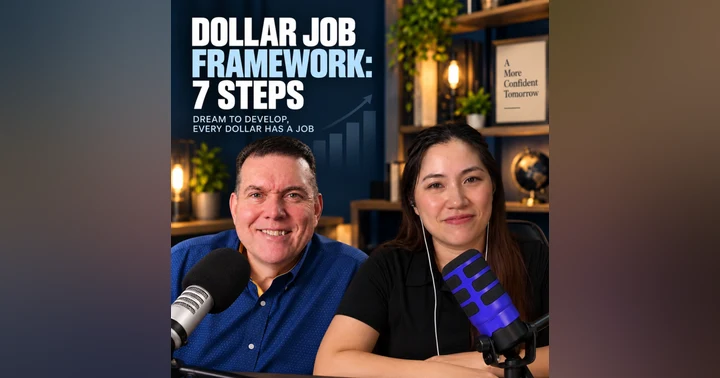
- I introduce the Dollar Job Framework, my seven-step process for giving every dollar a job before it leaves your account: dream, define, discover, design, deploy, debrief, develop.
- This week's money move: put a PIN on your SIM card and turn on two-factor authentication everywhere you can.
If you're one of the 37 percent who couldn't cover that $400 charge without borrowing or selling something, this episode isn't about shame. It's about figuring out which of the four stages you're actually in, and what the next right move looks like from there.
Send me your money questions at becomingfinanciallyconfident.com/question, I read every one. Or watch us live weekdays at becomingfinanciallyconfident.com/live.
Mentioned in this episode:
becomingfinanciallyconfident.com/quicken
Follow us on our socials:
Companies mentioned in this episode:
- ESPN
- Peacock
- BankGo
- Federal Reserve
- Quicken
- GoFundMe
- IRS
- FAFSA (Federal Student Aid)
- T-Mobile
- Verizon
- Netflix
- Dunkin' Donuts
- Starbucks
- ChatGPT
- School of Podcasting (Dave Jackson)
- Marriage and Money (Karen Hackman)
Frequently Asked Questions
What does the Federal Reserve's $400 emergency question reveal?
The Federal Reserve's annual question shows that 37 percent of adults cannot cover a $400 unexpected expense using cash or savings without resorting to credit card debt, borrowing, or selling possessions.
When does the FAFSA open for the 2027-28 school year?
The FAFSA opens on October 1 and utilizes your 2025 tax return, making it important to file taxes early and take advantage of the direct IRS data import tool.
Can I deduct charitable donations if I take the standard deduction?
Yes, new tax rules allow you to deduct up to $1,000 for single filers or $2,000 for married couples filing jointly in cash charitable giving even if you do not itemize your deductions.
Are GoFundMe donations considered tax-deductible charitable giving?
No, GoFundMe contributions generally do not count as tax-deductible charitable contributions because deductible donations must be made to IRS-registered 501(c)(3) or 501(c)(4) organizations.
What are the four stages of financial confidence?
The four stages of financial confidence outlined by Ralph Estep Jr. are awareness, intentionality, stability, and growth.
00:00 - Untitled
00:11 - Introduction to Financial Confidence
05:40 - Navigating the FAFSA Process
14:31 - Understanding Financial Confidence
22:26 - Understanding Financial Awareness
29:59 - Understanding Financial Stability and Intentionality
36:45 - Rebuilding Financial Stability After Downsizing
45:43 - Defining Financial Goals
49:05 - Designing Your Financial Future
54:45 - The Dollar Job Framework: Steps to Financial Confidence
Juliet Chuang
The name of this show is Becoming Financially Confident.And today we're going to actually explore what that really means, because I don't know if most people have really thought about this, and I didn't until a few weeks ago. Ralph is going to walk us through the four stages he believes that people move through to become financially confident.And what are some steps that you can take to help you go through each stage. Before that, we're going to talk about three things worth knowing. If you're paying for streaming services, prices are going to increase.Fafsa, which is for student aid, is going to open on October 1st. So Ralph is going to tell us a little bit more about that.And if you want to maximize your tax return, even if you don't itemize your taxes, well, Rafa is going to give us a little bit more on that as well. And then we will check in on this week's money move.So welcome to the show Becoming Financially Confident, where we are breaking free from money shame. One conversation at a time. We're live every Monday through Friday from 11:30am to 12:30pm Eastern.
Ralph Estep Jr.
Yeah. And I'm Ralph Estep Jr. Still a little froggy here today.Not quite as bad as yesterday, but it seems like this head cold is starting to get moved away. As you know, I'm a licensed accountant with over 30 years of experience, and I am Juliet.
Juliet Chuang
I'm just a regular person who's going to ask Ralph all the questions. Because you might have them, too.
Ralph Estep Jr.
Yeah. Because we're two very different people having conversations about the things that affect our money, and they affect your money.And remember, there's two house rules here. Number one rule, no shaming anybody about money. What happened yesterday happened yesterday, and today we're going to grow from that.And another thing about this show is nobody is going to be judged for what they didn't know. We're going to help you make better decisions and really get to that point of being financially confident moving forward.
Juliet Chuang
Yeah.So if you have a question that's on your mind about personal finance, please do send them in because we would love to talk it out, because it's not just you. Other people may have the same question. So send any questions to us at Becoming Financially Confident dot com. No question is off limits.
Ralph Estep Jr.
Yeah. Because wherever you are on your financial journey, guess what? We're all on a journey together. We're not alone in any of those things.
Juliet Chuang
Nobody handed you a contract to sign, but if you already pay for ESPN or Peacock, September 17th is the day that the price will increase. ESPN Unlimited goes from 2029. 99 To 31. 99Amonth. Peacock Premium goes from 1099 to 1299.And Bingo says the average American is already carrying 5.2 subscriptions at about $69 a month. That's roughly 830 a year. Ralph, how does a bill go up without anybody agreeing to it?
Ralph Estep Jr.
Oh, this is one of those genuine places where in the fine print that nobody reads, you know, where you sign up for something and they tell you to scroll through this thing and get to the bottom. It says, I've read the. That's where this is. So this is a big deal. And a lot of these are slowly going up, and a lot of times you don't realize them.That's the issue with this whole discussion about why I chose this headline for today. Because it affects the bottom line of how much you're spending. And look what they said right here. The average person's carrying 5.2 subscriptions.So if each of these are going up by 5 or 10% or 5 or 10 bucks, that's gonna add up to a lot of money in the end.
Juliet Chuang
I mean, I definitely pay attention. And I decreased the number of subscriptions I have because I would always get those emails.Hey, by the way, we're gonna start increasing prices in about three months. And after seeing multiple of those emails, I was like, y' all are trying to take my money. I'm going to cancel where I can.
Ralph Estep Jr.
Yeah, this is one of the things that I tell people about all the time.One of the main things you can do here is create a spreadsheet for yourself and put on that spreadsheet every single subscription that you have put on there the date that it renews. Put on the amount, and then I'm gonna tell you to put another column on there. And that is how important is it to you?Because a lot of times you might not think about it, but, like, yeah, if I had to make a decision, is this one that important? Now, I will tell you. A friend of mine, Dave Jackson, he's with the school of podcasting.He does something I think is pretty cool with streaming services. He actually moves from one to the other.So he'll subscribe to Netflix, watch all the shows on Netflix, then cancel that one, Then he'll go on to Peacock, and he'll watch all the shows on there.I think that's actually a pretty brilliant idea, because right now, I think a lot of us are dying by, you know, death by a thousand cuts, you know, 5.2 or $830 a year is not a small number. So that's why I thought this was important to talk about. And I just want to shout out, I see Dutches of New Jersey has joined us today.Dutch, thank you so much for joining us. And I caught her and John's show yesterday. I'll talk about that a little bit later in the show.But they were talking about something we're actually going to talk about this week on this show on Friday or Thursday. I'm going to give you a what it Cost Me. And I'm going to talk about what happens when you're not on the same financial page as your partner.And then we've got a really special guest coming in Friday. Her name is Karen Hackman. She runs a website called Marriage and Money.So this week is going to be all about how, how to get on the same page as your partner. So I just wanted to give that out. But let's go ahead and move on to our next headline.
Juliet Chuang
So if you have a child who needs to apply for student aid, what they're probably gonna look for is fafsa. And now Rafa's gonna tell us what the acronym stands for. Fafsa.
Ralph Estep Jr.
I actually had to look this up. What it stands for is the Free Application for Federal Student Aid.And most colleges are going to require you to fill this out, even if you're not going to qualify for any aid. So it's one of those things you want to make sure you're paying attention to.
Juliet Chuang
Right. So the FAFSA for the 2027, 28 school year. So that's not this coming one.The next one opens to everybody this year on October 1, and it uses your 2025 tax return, the one that you already filed. So, Ralph, walk us through this confusing timeline, and why does this date matter?
Ralph Estep Jr.
Yes, I'm going to go back to when my oldest son decided to go to college because I went through this process with him.And it was an interesting thing because if you think about it, what I just what we just said here is 10-1-opens, but you're thinking, wait a minute, my child doesn't start college till next fall, Right? Correct. So this is where this starts. And the reason you want to be early on this is because there's only so many dollars in each of these buckets.So that's why we're putting this out there right now. The second thing is it's using your 2025 tax return. Here's why it's so important to make sure that you've already got your tax return filed.Some people are still on extension. The personal tax filing deadline extended till October 15.So this is another reason to get your return filed because one of the coolest things about this we used to get.I remember when I first started my practice going back a few years now, people would call me up this time and you'd say, ralph, I can't figure out how to fill out this FAFSA form. Can you help me?Well, the IRS and FAFSA made it super simple because now what you can do is you can actually import your information from the IRS directly into this. So no more trying to figure out, like, what's on line seven? What does that mean, Ralph? What is on line 15? What does that mean?So it's a brilliant thing they did here. But just understand that there are deadlines for all of this.So, and even if you, if you've applied before second year in college, you still got to do this again. So make sure you're paying attention to that deadline.
Juliet Chuang
Yeah. So let me, let me see if I captured all of this right. October 1st is when the FAFSA opens for on October 1st, 2026.It's going to be open for 2027 to 2028, school year. And you, the IRS and FAFSA have worked together, I suppose, to make it super easy to fill out this form.
Ralph Estep Jr.
Yeah. And like I said, fill it out even if you don't qualify, because some schools use this for other things.And I like what Dutchess put, she said, that's the only thing that's free. Regarding college, isn't that the truth? You know, I see what people are paying for college right now. I'm like, you got to get a second mortgage.It's a big deal. That's for sure. But yeah, I think you've encapsulated perfectly. So I don't want to spend a lot of time here.It's just one of those things that I think you need to be aware of and you need to be aware that there are deadlines with this one.
Juliet Chuang
All right? This is another tax related thing that you guys may or may not know. So pay attention to this. We are going to be talking about standard deduction.So it's up to $1,000 of cash giving and $2,000 if you're married, filing jointly. So there are a little bit of changes that happened over the recent years. So, Ralph, can you talk us through this?
Ralph Estep Jr.
Yeah, let me explain what this is all about, because this is a little bit. And even in the Pre show. Julia and I talked about this. I'm not sure she understood where I was going.So charitable contributions are deductible on your tax return if you're able to itemize. So basically, when you file a tax return, you have two choices.Choice number one is you get the standard deduction, meaning that no matter what your situation is, you can deduct X number of dollars. Well, three or four years ago, they basically doubled the standard deduction.When they did that, it made it so a lot fewer people were actually itemizing deductions, which meant that if you were doing charitable contributions, that became less of a value for you because the floor of that standard deduction had gone up.
Juliet Chuang
Up. Yeah. Okay.
Ralph Estep Jr.
So what they've done now is outside of the ability to itemize deductions, even if you don't have the ability to itemize, they've now changed the law that you can write off up to $1,000 of giving for charity, regardless of whether you're going to itemize or take the standard deduction. So what does this really mean?What this really means is if you give up to $1,000 single or $2,000 married, filing jointly, you can deduct that from your income. So it's for those people who may not have the ability to itemize but still want to be charitable.Now, if you're already itemizing, there's no thousand dollar cap, there's no $2,000 cap. You can give up to half of your income and still be able to take a deduction for that.Make sure you have receipts, make sure you have evidence of that. You know, if you throw a 20 in the collection plate, that's not a receipt, the IRS will disallow that.Another thing a lot of people don't understand, GoFundMe is not a charity. So if you give money to GoFundMe, that is not a charitable contribution in order for it to. Oh, I just. I see that. Juliet didn't know that.
Juliet Chuang
I did not know that.
Ralph Estep Jr.
Yeah, a lot of people don't know that. So a charitable contribution from the IRS regulation means it is a charity that is registered with the IRS.It's what's called a 501C3 or a 501C4 organization. Basically, what happens is a charity has to apply to the IRS to be considered a charity as a contributor.Your responsibility, if you choose to do it, is to go verify the charities and make sure they actually have charitable status with the irs. Now, I'm going to be blunt. A lot of people don't do that. A lot of people assume, well, it's a church. It's the this, it's the that.GoFundMe is one of ones that catches a lot of people when they come in to get their taxes done, they'll have this stack of receipts. And I'm going through that. I'm like, oh, wait a minute. GoFundMe, that's not deductible. Wait a minute. Why is that not deductible?Because GoFundMe is correct. You did. It was a contribution, but it's more of a gift.So contributions have to be given to into companies or to businesses that are actually charity. They've registered with the charitable. Different things. So let's talk about what cash means.So cash means a check, electronic transfer, credit, debit card. You can do it through payroll deduction. Those are all things that are really important.Now, before, here's one of the things I'm going to point back to back in time thing. Back in 2020 and 2021, they did this before and it was only $300.So now that they've expanded that a little bit, I think what was gonna happen here with my crystal ball is I think a lot of the charities got upset because they increased the standard deduction. And I do some work for some churches and we have seen a bit of a decline in giving because there's not that benefit from a tax perspective.I think there's a benefit outside the tax perspective. But that's one of the things that I think we've really broken through here. And I think this is actually a really good thing.I think this is a positive thing. So if you are going to give, make sure you keep in your receipts.
Juliet Chuang
Yes, yes. Good, good takeaways.
Ralph Estep Jr.
Awesome. Well, let's talk about Quicken.We've talked about that on the show before, but Quicken is one of those services where you can keep track of what you're spending. One of the things we talk about on this show all the time is having clarity, understanding and being aware where your money goes.If you don't keep track of it, it gets spent. And that's why we've worked together to build this affiliate relationship with Quickening. And we don't believe it's because you're careless.It's because you just don't know what's going on. So if you're interested in finding out more about Quicken and how you can work with Quicken directly, you can go to becomingfinanciallyconfident.com.Quicken Again, that's becomingfinanciallyconfident.Com Quicken. It's a paid subscription. They bill you for a year in advance. It's called Quicken Simplify. I've personally used it. It's great software.It allows you to connect your bank accounts, your credit card accounts, and those transactions feed in so you can see exactly what's going on in your account. So like these subscriptions that we just talked about or any kind of renewals you have, it's right there.So if you're interested in finding out more information, go to becoming financially confident.com/quicken.
Juliet Chuang
I'm really looking forward to today's conversation in the breakdown. So the breakdown is essentially a little mini masterclass, mini money masterclass.But today we're going to kind of shift the conversation a little bit to explore this question. What does it mean to be financially confident?So before we actually dive into the conversation with Ralph, I would invite everybody in the audience to think about this question for themselves. What does. How do you know when you feel financially confident? And please put it on the chat or in the comments of whatever platform you're on.Okay, so Ralph, I'm going to start off with you because this is a conversation that we've been having a little bit more intentionally offline for the last two weeks. So where, how do you think about feeling financially confident?We've talked about different levels or different stages and yesterday you had like a little bit of inspiration. And so I want to hear what's the update?
Ralph Estep Jr.
I did. And this is one of those discussions that is not really pre planned.And I did that intentionally because my goal is today to have a conversation with the audience, have a conversation with Juliet to really talk about this. Because Juliet said something, she said, ralph, we use the words financially confident every single day on this show. But what does that mean?What does it mean to be financially confident? Because a lot of us would think confident that means, oh, I'm picturing somebody who's rich or somebody that's got it all figured out.Not somebody who lies awake at night wondering about what's going on. And I think the problem is if you define it like that, the truth is not all of us are going to be rich. You're never going to get to that point.So this is, it's not about a feeling we're talking about today. I really want to, I want to get into like talking about what does this mean to the.I want to throw something out there because there's an interesting thing that the Federal Reserve does every year. And this is where I think a great place to start. The Federal Reserve asks people a simple question every single year.If you had an unexpected $400 expense hit you right now, how would you pay for it? So, Julia, I'm going to throw this at you first.So if you went to, you got an automobile, and let's say that you have a car, all of a sudden it makes this funny noise. You take it to the auto mechanic, and the auto mechanic calls you and says, juliet, I've got good news and bad news.The good news is we can fix your car. The bad news is it's going to cost a little bit more than $400 to fix it. So the question is, how would you pay for it?
Juliet Chuang
So for me, I would feel good knowing that I can cover it with my emergency savings and then I would pay it for my credit card. But I think where I lack a little, like, long term sight is if I have additional emergencies at the same time, you know, then I would have to.Then I would immediately get into, oh, I need to figure out how to make more money right now. Right.And I think what's missing in there for me at least, is having the knowledge that, oh, I am using my money to grow money, so then I don't have to always be trading money for my time and energy.
Ralph Estep Jr.
I think that's a great observation. I want to share something that Dutchess put in the, in the chat too. And then I'm going to, I'm going to continue on here.Said Dutch is says, I would feel financially confident if I didn't have any overhead debt and will be able to pay for things I want to do, et cetera. I think that's a really good way to look at it, Dutch. It's a very good way to look at it.I'm going to tell you what the answers were and what the Federal Reserve found out when they asked this question.
Juliet Chuang
What do they find out?
Ralph Estep Jr.
12% Of adults who were asked that question, one in eight said they couldn't pay for it. A $400 charge. They couldn't do it with cash. They didn't do it with a credit card they couldn't borrow, not by selling something.So by no means were they able to cover a $400 charge. Clearly that person or those people are not financially confident. But it goes a little deeper.Another 15% said they'd put it on a credit card, which, that sounds good, but here's the problem.
Juliet Chuang
Balance.
Ralph Estep Jr.
That's right. So 15%, they said they'd put it on a credit card and carry the balance. 10% Said they'd borrow from friends or family. You might know those people.7% Said they would sell something.
Juliet Chuang
Right.
Ralph Estep Jr.
But here's the scary statistic. 63% Said they could handle it, they could pay for it with cash, with savings or a car. They would pay off on the next statement.So right now, if you're sitting there right now and you're doing the math on whether you could cover $400, there's a lot of people in that same boat. And that's why this show isn't about judgment. It isn't about making you feel shameful where you are.That's the whole point of why we're having this discussion today. Because this is a real kitchen table issue. If you got hit with that $400 charge, what would you do it? What would you do? What would you do?
Juliet Chuang
I want to highlight a couple of things in here before we really dive into what you have thought through as the four stages of financial confidence. Sorry, let me cough it out real quick.
Ralph Estep Jr.
The frog has escaped and it's gone to California.
Juliet Chuang
Ralph, why did you do this to me?
Ralph Estep Jr.
We are not even in the same state and she's got the frogginess going on.
Juliet Chuang
Yeah. I will say Duchess of NJ said credit card, if you can pay it off within a month. I think that's exactly the point that I wanted to highlight. Right.Because just because you have a credit card, just because you can't do that, that's not it. If you're carrying a balance. Because we have talked so much last week about how credit card interest will get. You will get everybody. Right.So I think it's also having that mentality of even if I can put it on a credit card, can I pay off the balance before I accrue interest on it? That's a, you know, some people, they do need to get start setting that as that should be my baseline. That's not like a, oh, one day thing, you know?
Ralph Estep Jr.
Yeah, absolutely. And what I will say there is we talk about emergency funds.
Juliet Chuang
Yes.
Ralph Estep Jr.
A credit card is not your emergency fund.
Juliet Chuang
No, not at all.
Ralph Estep Jr.
A credit card is fine to use. My oldest son loves his credit card. He pays it every week. Use it for points, use it for convenience, use it for safety.But if you have to put stuff on a credit card, you're going to carry that balance over to the next month. You've got a problem, that's a debt. And again, I'm not judging you. Please understand.I'm not, I'm not the guy out there saying, don't ever use credit cards. I'm not saying that there are situations where you have to. That's fine.
Juliet Chuang
But, but that's, that's, it's a mindset.
Ralph Estep Jr.
It is a mindset. And that's the thing I want to talk a little bit about. Mindset. So financial confidence start to unwind, what this looks like.
Juliet Chuang
Yeah.
Ralph Estep Jr.
Financial confidence is not a feeling about your money. Let's start there. It's not a feeling. It is knowing what your, what is true about your money and knowing what you would do next.
Juliet Chuang
Yes.
Ralph Estep Jr.
Because that's the issue. You got to understand what's true about your money and what you're going to do next. And that's why I like to start with the word awareness.I think awareness is a really big issue.
Juliet Chuang
Yes.
Ralph Estep Jr.
Those two things I just talked about, you can't feel your way into those things. The way you get to that point is you collect evidence until confidence is the only reasonable conclusion.
Juliet Chuang
Right.
Ralph Estep Jr.
And that's what we're building towards.
Juliet Chuang
Yeah. So let's talk about this awareness a little bit more. You're just saying, like awareness as. Do you know what's coming in and what's going out?Do you know how many subscription services you're paying for? Calling back to the first headline of today, all of that.What other questions would you pose to somebody who is trying to see how much financial awareness they have?
Ralph Estep Jr.
Yeah, here's what I would say when I sit across the table from people and I've been doing this for a long time. I am, I'm listening for the four stages that they're in. And it's because I'm not trying to grade them.I just want to help them to know where to start. So let's start with awareness. Stage one is awareness. The question that it's answering is what is actually true?And when I say to somebody, for example, we've, I've asked this on the show the last couple days. What did you spend last month? That's awareness. What came in, what went out. If you can say your numbers out loud without looking away.If you know, hey, my mortgage, is this. My property taxes, is this my car loan, is this. What I have found is most people avoid that. They don't open their statements.We have a whole segment here called, you know, the Envelope. And I don't want to do these things because it all starts with awareness. But so many people have been bought into this lie.They've told themselves, well, Ralph, I'M just not good with money. Oh. I can never save. I can never get ahead.
Juliet Chuang
You can.
Ralph Estep Jr.
You can, but it starts with being aware of what's really going on. And that's. That's a hard thing sometimes.
Juliet Chuang
Right.
Ralph Estep Jr.
I'm the accountant, and there have been seasons in my life where I didn't want to look at my bank account, where I didn't want to look at that credit card statement. I didn't want to look at what was really going on. I had no idea what my debts were. And it wasn't that I didn't care. It's just.I just didn't have the ability to. I felt overwhelming at that.
Juliet Chuang
Yeah.
Ralph Estep Jr.
But if you want to get to a place of starting to get to a place of developing financial confidence, the very first thing you've got to understand is awareness.
Juliet Chuang
For sure.
Ralph Estep Jr.
That's the only entry fee to what we're talking about today. If you don't want to be aware, I'm sorry, this show is not for you. I can't help you. That's just the truth.If you're not willing to embrace awareness and know where your money's going, again, I'm not judging you where you spend your money. It's your money you work to be. I could care less where you spend your money. I can help you make better decisions.But if you're saying to me right now, ralph, I don't care. I don't want to be aware, I'm not looking at that stuff. I'm sorry, this is not the show for you.
Juliet Chuang
Yeah.
Ralph Estep Jr.
How does that strike you?
Juliet Chuang
No, I think that's really, really important. And it's. I will also mention this. Is that just because you have been aware. Right. Like awareness, it has to become like a mindset or a habit.Because I would definitely say that right now I am semi aware, and I have to improve on that. But there was a time when I was super aware, but maybe some, like, emotional burden came across, and I was like, I don't want to touch it anymore.But now I'm ready back in that mindset. Oh, I do want to be very financially aware of what my finances are.
Ralph Estep Jr.
Yeah. And I want to put what Duchess put in the comments here. She said, I used to throw in my credit card statements. I was young and dumb.And I'll let you say that, Dutchess. But you're not alone in that. Trust me. I have clients right now who come in, who have businesses who don't even open up their bank statements.They don't open up their credit card statements, because it's almost like this feeling of it. If I don't actually see it, it's not really happening.
Juliet Chuang
Right. And that's.
Ralph Estep Jr.
That is not going to get you to a place of financial confidence. So that's stage one. I'm going to lay out some basic stages, and then we'll get into a little bit more detail. So that's.The first stage is really understanding and being aware of where you are.
Juliet Chuang
What is stage two?
Ralph Estep Jr.
The stage two thing to me is intentionality. And Dutchess kind of said this. She said, be an ability to pay for the things I want to do.And I actually think that I could interchange both of these because when a lot of people hear that, I'm actually working on a book, it's called the Dollar Job Framework. And I built a core structure that we're going to be able to offer here to our. To people here on the show.But basically, I don't start with restriction, because if you hear the word budget, most people hear diet, most people hear, well, I can, I can, I can't. I start off a little bit different. I start off with what I call the dream. And the dream is where you start that. And it's all about being intentional.Because the question you're asking yourself in stage two is, where do I want it to go? Where do I want my money to go? Because it's not. You've already known where it's going. You've already done the awareness.You know what's coming in, you know what's going out. But now you're really thinking about, okay, I have this dream. And the dream could be very specific.It could be a dream of, I want to buy a home someday. I want to have money in the bank. I want to ask you to be a little bit more specific about what those things are.
Juliet Chuang
Yeah.
Ralph Estep Jr.
But starts with the dream. Because if you start with, well, restriction, if you're like me, you're going to not do it. You're going to be like, you know what?I don't have the willpower for this.
Juliet Chuang
It already feels bad.
Ralph Estep Jr.
It already feels bad. But if you have an incentive, you have that dream of, like, here's why I'm making these decisions every day.I'm driving past Starbucks every day and not pulling into the drive through because I wanted to go somewhere.
Juliet Chuang
Yeah.
Ralph Estep Jr.
And when I meet with people and they tell me, ralph, here's my dream, here's what I want to do, that's a person I can help. Because you have intentionality.
Juliet Chuang
You know what I hear. So, like that example that you said. You know, I used to buy a lot of Starbucks, but now I no longer, you know, go there every single time.Starbucks, that's your choice.What I actually hear is that if you're being intentional with your money, you are able to see the, the sunk cost or like the, the decisions that you want to make. Right. Like maybe it is not Starbucks because I have a bigger dream. It's not Starbucks because I want to save money for my emergency savings fund.It's not Starbucks because I am going to do something which that you think is better served for your money.
Ralph Estep Jr.
Yeah. Here's a great example of that. Let's say that you are a person that goes to Starbucks every day.
Juliet Chuang
Yeah.
Ralph Estep Jr.
And I look at what people spend. I don't drink coffee, so for me it's easy. But like, for me it might be Dunkin Donuts.When I used to be big and fat, I used to stop at Dunkin Donuts all the time. But here's the difference.I decide to not go through the drive thru because I want to be able to put a hundred dollars a week into my retirement fund, or I want to be able to put $100 a week into paying down my credit card debt, or I want to be able to put whatever that is to do something with it. I like what Dutchess said here. She says being financially healthy correlates closely with being physically healthy. She is 100% right.That is one of the things. And that's where we talk about intentionality.
Juliet Chuang
Yeah.
Ralph Estep Jr.
Again, you're making an intentional decision. It's going to affect you physically, it's going to affect you emotionally, it's going to affect you spiritually.All of those levels of intentionality, it's not just a math equation. It's so much bigger than that. And when you can live intentionally, you will have a much better life.
Juliet Chuang
Yes.
Ralph Estep Jr.
Because you're not reacting anymore. See, that's the difference when you're reacting. When you get that phone call. I used this example earlier.When Juliet gets the phone call from the mechanic and says, juliet, your car needs to be fixed and it's going to be $400 if Juliet is financially competent. She goes, oh, that's no problem. Because every month I set aside $100 a month into my auto repair budget and now $400, I got that. That's no problem.Don't even blink an eye. See, that's being intentional with her money. That's where you're not living in that.What happens next, that fear that scarcity, that always reactionary. Because to be financially confident is not to be reactionary. It's to be intentional in what you're doing.
Juliet Chuang
So then what is the next stage that you envision on this ladder to financial confidence?
Ralph Estep Jr.
Yeah. So we start with awareness, then we get into intentionality, and then we get to stability.Let's talk about what stability looks like, and it goes along lines that we just talked about. Can I absorb that surprise? What does that surprise look like? It's kind of like if you had a $1,500 problem.Let's say all of a sudden, you wake up tomorrow morning, you go to take a shower, you turn on the hot water, and that puppy is cold, you got no hot water at all.
Juliet Chuang
Right.
Ralph Estep Jr.
And the first thing you think of is, oh, you know that hot water heater in the basement? It's probably about 15 years old, probably needs to be replaced. And you kind of have an idea.So you go into your chat GPT and say, what is a new hot water heater? And it says, 1500 bucks. Yeah, well, being stable is the difference between that being an annoyance and becoming a true crisis. Because it's.Stability means that you have $1,500.You understand, you've planned ahead, you've been intentional, you're aware where your money's going, and it doesn't become a crisis for a lot of people, hey, what did the Federal Reserve show? $400 Was a crisis for 37% of the population in some way.They either had to borrow, they had to go shake down a friend, sell their tv, do something like that.
Juliet Chuang
Yeah. I have a question for you here.And we're just going to do a little bit of pushback is how do you differentiate between intentionality and stability, though, Right? Because depending on if somebody who doesn't have $400 and they started with awareness, oh, I now know where my money is going.Um, I would think that the next stage for them is to do intentionality and stability at the same time.
Ralph Estep Jr.
Well, I think, you know, fair enough. I think stability builds off of being intentional.
Juliet Chuang
Okay.
Ralph Estep Jr.
And I think that as you make more intentional decisions, having an emergency fund, paying off your debt, putting away money for retirement, doing all those things, all those tasks, all those things you're doing, and then are building that stability, you're not going to reach stability in one day. You're not going to reach stability in a month or maybe even a year. You may not even reach stability for 10 years.It just depends on your intentionality. What that stability looks like. For you.And to be blunt, you may be one of these people that's like, you know what, if I got enough money to make it till Friday, I'm cool with that. Yeah, I can't live like that. But I know people that can live like that. Okay, But I think the big issue with stability is does. Does.Does an expense that you weren't expecting become an annoyance? Because, hey, listen, having to get that hot water heater, that's an annoyance.
Juliet Chuang
Oh, yeah, you may have to take off of work.
Ralph Estep Jr.
You meant to take off of work. You got to call the plumber. The plumber is going to tell you ain't gonna have hot water for a couple days.You're like, oh, maybe I'll go visit grandma and get a hot shower over there. But if it doesn't trigger a crisis, then you're getting to a point of being stable.
Juliet Chuang
So then what is the last stage that you envision?
Ralph Estep Jr.
So the last stage that I envision. And listen, I'm going to be very transparent here. This is something that's a work in process.And if you're interested in finding all this out, we actually put this together in a one page document that you can go download or you can go join our school community by going to becomingfinanciallyconfident.com community. We'll put a link in the show notes, but again, that's becomingfinanciallyconfident.com community. And I put together a one page for this.But the final stage for me is growth. And we can also use the word renewal here if you want. And I just thought about that as I was talking here.
Juliet Chuang
Let's hear it.
Ralph Estep Jr.
Talk to me. Because the question here is, what do I want this to buy me? And it's not about more stuff. Dutchess said it perfectly. It gives you options.
Juliet Chuang
Yeah.
Ralph Estep Jr.
When you're in a stage of growth, you've already aware, you've already been intentional, you have that stability. And now you can say, hmm, what could I do with this? Can I put more money into retirement?Could I take that vacation that my husband and I, or my wife and I, or my partner and I have been wanting to take for years? Can we pay for that wedding that we want to do for our children? Can we pay for a college education?
Juliet Chuang
Right.
Ralph Estep Jr.
What does that dream look like now? Because maybe the original dream. Let's start at the beginning of the situation. Maybe the original dream is I got a ton of credit card debt, Ralph.I don't want to be in credit card debt anymore.
Juliet Chuang
Yeah.
Ralph Estep Jr.
So you were aware of that. You were intentional with your spending. You skipped the scar, the Starbucks. You didn't go on vacations. You scrimped and you saved.You ate beans and rice, whatever that looked like you were intentional. You build that stability. You paid off those credit cards, and now you're going to. Well, what's the next challenge here? And that's why this.I call it growth or renewal. Because what's the next dream? What's the next thing you're going to work for? Because your whole life, your whole financial life is a journey.It's not a destination.
Juliet Chuang
I want to put it in the chat. Like, if you know what your next financial goal is, we would love to hear it in the chat.If you are, you know, if you don't have a dream yet, that's totally fine. Let us know too. We can start dreaming about this together.
Ralph Estep Jr.
Yeah. So what's your dream? Let me ask you to put you on the spot, Julia.
Juliet Chuang
Oh, I. Well, my dream right now is to rebuild my emergency savings, Right? And then I think I want to go from semi awareness to full awareness.Those are my short term dreams, my long term dreams. I would love to be able to take my parents on vacation or, you know, like, give back to my parents in a meaningful way.And that's always an interesting one, because vacation is the thing that I think of right now, but I imagine in the future it might change. Like what it is. It might change, but I would love to be able to, you know, treat my parents to a good life.
Ralph Estep Jr.
So let me poke a little bit here, because I know something about you that I'm hoping you're willing to share.When Julia and I first started talking about working together, we had put together a nationwide search to find somebody, and we had put together a bunch of questions about people's financial situation. And I gotta be blunt with you, Juliette. One of the things that stuck out to me is that you had been downsized from your work.You had gone from a typical corporate job. And one of the things that Juliette put in her thing is, she says, but I built enough Runway. And I apologize if that wasn't the word you used.But that was the word that I took. Yeah, yeah, Runway. Let's talk about that for a second. Because what you just said to me is very striking, because you said, what I'd like to do.One of my dreams is to rebuild that Runway that I'd set up aside. So you had already been aware, you'd already been intentional.So when you were working your traditional nine to five, whatever that was in corporate world, you had already made a decision to be intentional. You were working to building stability.So then, if you don't mind sharing with the audience, tell us about what that felt like and how have you been working to rebuild that.
Juliet Chuang
Yeah. Okay.So being downsized, like building that emergency savings the first time around, it definitely required a lot of awareness and intentionality, and I did that. I think when I was downsized, I kind of. I mean, it always hurts when you're downsized. You kind of go into a little, like, emotional tornado.And at that time, I was very much like, I don't want to see my credit card statements anymore. I don't want to see these bills. I know they're happening. I know I can do it, but I don't want to know the exact number.
Ralph Estep Jr.
So even though you were living in a point of awareness and intentionality, when this hurdle was put out in front of you, it kind of reverted back. You went back to a place of, I know I've prepared for this, but I don't want to face it right now. Is that fair to say?
Juliet Chuang
That is fair to say. And I think part of that is, I think it sucks to see something. I spent a lot of time and energy building up my emergency savings.Seeing that number go down and being like, oh, my God, is that the cost of my daily living, my monthly living? And seeing that, that's like a face of reality that I. I don't think a lot of people like to see.Because then you can start to see, oh, my gosh, I'm spending. And. And here's where I'm going to be like, I don't know my numbers, but, like, let's say you spend $2,500 a month. Right.But then when you get down into it and you see how much you're spending on streaming services and all of that, it's. It's shocking, and it's almost like a judgment on myself. It's a judgment on myself because you know what?I think the people who are the harshest critic is yourself. When you know your numbers, you're going to be your own harshest critic.
Ralph Estep Jr.
Oh, yeah. And I think what. It also points out that life is about seasons and about a journey. Because you didn't expect you. You were.You were trudging along with, I'm going to be in corporate. I'm going to continue to put money into retirement. I'm going to keep you building this up. And then all of a sudden, out of left field.
Juliet Chuang
Yeah. And Then. So now I'm trying to rebuild that, but I'm even more intentional in how I want to rebuild that. Right.Like, when I was in corporate, it was difficult, not just emotionally, physically, and mentally, but now that I'm like, I want to rebuild my savings, I want to do it in a way where holistically, I feel so much healthier and do it in a better way before. So even though it's slow, it's tough right now, but overall, I feel a lot more capable and I feel a lot happier.
Ralph Estep Jr.
Yeah. And I think what this builds on is when we talk about moving through these stages, I want to take a couple minutes and talk about that.
Juliet Chuang
Yeah.
Ralph Estep Jr.
What you're talking about is kind of like weight training. You're building muscles. Awareness is an inventory. Okay. You're building an inventory of these things.
Juliet Chuang
Yeah.
Ralph Estep Jr.
It's not a budget. It's not some snapshot you do once and then say, I'll never do it again. And Julia, it's a definition of that. She didn't expect.At some point, I had to go back again to awareness and say, what am I really spending?
Juliet Chuang
Oh, man. It was a huge. Like, I'm sure, Ralph, you have this, like, in times of your life, you're like, oh, my God, I'm at this age.But why do I feel like I'm starting from the beginning line again? The starting line again. Right.And something that I always have to tell myself, it's like, even if you're at a certain age, if you learn more awareness and it feels like you're at the starting line, you're really not at the starting line, because you already know, oh, these are the things that I need to do in order to get back feeling really good and even excelling beyond the last time, where I got to the last time.
Ralph Estep Jr.
And really what you're talking about is I lift weights now as part of my health journey. And there's a thing in weightlifting called muscle memory.
Juliet Chuang
Yes, it is.
Ralph Estep Jr.
And it's a real thing because I spent years not lifting weights anymore for a while. And when I. I guess it's probably been about a year and a half now, I just started to start lifting weights again.And what you're really talking about is that muscle memory, because when I started lifting, it didn't take me but a couple weeks, and I was back up to lifting the same amount of weight that I was lifting before.
Juliet Chuang
Amazing.
Ralph Estep Jr.
So it's not that you're starting over, and that's what I want people to hear. You already know the things to do. You already have those muscles.You just haven't worked out those muscles in a while, which is why the intentionality is so important. Intentionality is not cutting something. When you hear the word intentional, it doesn't mean, I'm going to cut this and cut this and cut this.That's not at all what we're talking about here. Yeah, intentionality is directing. It's being able to be the director of your life. Because I want to kill that misconception right now.Because so many people hear the word budgeting and they go, oh, that's just restriction.
Juliet Chuang
Yeah.
Ralph Estep Jr.
This is not punishment. We're talking about that. We're talking about here.It's not a list of things you can't do, but it's a plan that is going to work for you moving forward. So that's why it's so important to be aware and to be intentional. Now we move into stage three.That's the hinge, and that's where we need to talk about this. Because if you don't have a cushion. Juliet had the definition of a cushion.When Juliet's boss, or however that worked out, pulled her in and said, guess what, my friend, you don't have a job here anymore. Juliet had built that Runway. She'd built that cushion. Juliet didn't have to say, well, I'm gonna go put this on a credit card.She didn't think, well, I'm gonna have to go find the first job I can take because I need to eat. That could be, for you, a job. It could be that tire that blows out on the side of the road.It could be that medical deductible because you had a setback because of your health. If you've got a pet, it could be the vet calling and saying, guess what? Your dog needs a replacement hip. I mean, those things happen.Happen to my oldest son. His dog had a birth defect. He had to have his whole hip replaced.But that's all about being intentional and understanding how to get to that stability. That cushion, it helps you stay out of trouble. And that's exactly what Juliet got into. This is where you talk about investing.This is like building new stability so that when the transmission goes out, you know how to put that money back in. That's exactly what Juliette's doing right now. She's figuring out a way to move forward. She's figuring out, I want to be an entrepreneur.She shared that with the group. I'm not sharing that with anybody out of school. She said, I want to be an entrepreneur. I want to set my own destiny. I want this to work.And that's so very important about this.
Juliet Chuang
Yeah.
Ralph Estep Jr.
And everybody starts in different phases. You might go forward, backward, upside down, but just remember, you have the muscles.We're going to help you every day on this show build those muscles. That's what this really, this show is all about.So becoming financially confident is about building muscles and helping you make those stronger every day with every single decision that you make, one day at a time.
Juliet Chuang
That is really good. So you mentioned early on the dollar.
Ralph Estep Jr.
Job framework, and I'm prepared to talk about that a little bit today if you want to talk about it. I can kind of walk everybody through what that looks like.
Juliet Chuang
Yeah. Well, first I want you to say, like, where does this framework squarely fit into in the four. Four stages that you have outlined? Right.And then give us a little bit brief on what that framework is.
Ralph Estep Jr.
Yeah. So these really fit in all four of these stages. The dollar framework, it's built around seven.I'll use the letter D because that's what I build around, because I think people memorize stuff when it comes with a particular letter.
Juliet Chuang
Okay.
Ralph Estep Jr.
So this is something that I've been working on for the whole time I've been doing this kind of work. I'm going to talk to you about what I call the seven steps, because that's where I think we need to go.And these steps help build all of those things. We're talking about awareness, intentionality, stability, and growth. It starts off with the dream.And like I said before, don't start off with the restriction. I think to be effective in any kind of budgeting decision. I call it the dollar job framework because I want you to dream about.What does that look like for you? So the very first question I'm going to ask you, what do you want your money to make possible?
Juliet Chuang
That's key to the whole thing. I'm going to ask you, what is your dream right now?
Ralph Estep Jr.
I'll be very honest with you. I've been doing accounting work for a long time. My dream right now is to do less accounting work and more working with people one on one.And my accounting work has been giving me the opportunity to do this show as an example. This show is not a moneymaker for me.I'm going to be very candid with you, but I'm hoping that over time, it will allow me to do more of this type of stuff because this is what fuels my fire. This is what makes me want to get up in the morning helping people one on one. Get to a place of being financially confident.So for me, all the decisions that I make, my intentionality about money, my decisions about retirement, my decisions about where I spend my money, helps me build that dream so that I can have more margin to do a daily show like this, that I can go out and buy advertising, that I can go find production people, that I can go find an audience. That's why it's so important to me to do this.
Juliet Chuang
Okay, so that's the first. That's number one dream. We have your dream. What's the next one?
Ralph Estep Jr.
The second thing is to define. And this is one that trips up a lot of people. This is where you have to put a number and a date. It's not.It's one thing to say, well, I want to get all my credit cards paid off.
Juliet Chuang
Okay?
Ralph Estep Jr.
That's not a definition. That's a hope that happens. So what I challenge people to do is put a number. So let's just say that you have $20,000 in credit card debt, okay?And you say, I want to pay off my credit card debt. I'm going to ask you two questions. Number one, how much and what's the timeframe? Okay, so you might say $20,000.You might say, well, from a realistic perspective, I want to pay it off next week. And I'm going to say to you, probably not going to happen unless Aunt Charlotte dies and you inherit some money you're not expecting.
Juliet Chuang
Yeah.
Ralph Estep Jr.
So let's be realistic about that. Let's just say you say, I want to get out of debt. I'm going to even back up and say, how many credit cards do you have?Well, I have four credit cards for simple math. Each of them have $5,000 on it.
Juliet Chuang
Okay?
Ralph Estep Jr.
So I'm going to define and say, let's attack that first credit card first. You owe $5,000 on a credit card. Let's say we want to define that by putting a number, $5,000 by six months from today.
Juliet Chuang
Okay?
Ralph Estep Jr.
So six months today, I want to be out of that credit card debt. That's how you define the number and put a date on it. You see what I'm doing there?I'm making it very specific because so many people say, well, I want to be rich or I want to do something. I want to save money. Okay, what does that mean? I want to save money. How much by what period in time?Because if you can't define it, you're never going to get there. And that's the problem with a lot of people's financial situation. Is they don't have a clear definition of what they want. So what's the dream?What's the definition?
Juliet Chuang
What's the third thing?
Ralph Estep Jr.
Now, third thing goes right to understanding where you are. Awareness. I call it Discover. And that's where you find out exactly what's true about your money right now.Now, this is one of those things that it hurts a little bit because when you look at it, when you open up the envelopes you've been putting off, when you open up those credit card statements, when you look at how much debt you have, how much is left on the student loan, how much upside down you are on your car, all those type of things. This is a discovery phase. It's not about shaming you. These are decisions you made before. You can't change them, but you need to be aware of them.So that's the third level, is discover what is actually true about your money right now without shame. So one of the things I tell people to do there is really to create two documents.Document number one is a list of all of your assets, what you own, cars, furniture, stuff. Column number two is what you owe, every single debt. Credit card, mortgage, car loan, whatever those things are.The buy here, pay here, the buy now, pay laters, all those type of things. List them all. The difference between those two numbers is what we call net worth.For a lot of people, the net worth is zero or close to zero, because they don't have enough to justify the debt. Because they bought experiences, they bought vacations, they bought fun, which is fine, spend your money how you wish.But if you're not buying assets, you are not building net worth. So that's. The next piece is Discover. Once we get past discover, then we have the information, we have our dream. We define what our goals are.We know where we are. Then we start to design. This is where we actually grab a little bit more of that intentionality.
Juliet Chuang
Okay?
Ralph Estep Jr.
And this is where I give this whole idea of giving every dollar a job. This is why I think this works for so many people. Most people understand what it means to be. To have a job.When somebody hires you, they give you a job assignment, right? You have a job. When you were working in corporate, you had a job, you had a job description, you had accountability.Somebody said, here's what you were going to do, Juliet, here's the results, what you want to do. You gotta think about your money the same way. If you create a job for every single dollar that comes into your world.Yeah, that's the design piece to this.
Juliet Chuang
I Love this one a lot. And it's something I'm excited to get back into once I get there. What's the fifth thing that you have?
Ralph Estep Jr.
So once you've designed the jobs, once you put the job descriptions for every single dollar, then you deploy it.
Juliet Chuang
Deploy it.
Ralph Estep Jr.
And what that means is that every dollar gets a job before it leaves your bank account. Because here's the thing I've found unassigned dollars go away. You don't know where they went.
Juliet Chuang
Yeah.
Ralph Estep Jr.
But if you assign every single dollar that comes into your world, like if you know your salary this week is $1,000, and you say, I'm going to assign 600 of those dollars to my rent, I'm going to assign $200 of those to groceries. I'm going to assign $100 of that to my retirement account.
Juliet Chuang
Yeah.
Ralph Estep Jr.
You know where every single dollar goes. And here's the best part of that. There's no emotion in that.
Juliet Chuang
I like it.
Ralph Estep Jr.
It's already got a job. It's already been assigned a job. And if you find, wait a minute, I got more stuff than I got dollars.
Juliet Chuang
Yeah.
Ralph Estep Jr.
Then you have to start thinking about, okay, I gotta make some reassignments here. If you're running a business and think about a grocery store, all of us have experienced this. You see lines to the back of the store, right?What does the grocery store usually do? They open up another line.
Juliet Chuang
Yeah.
Ralph Estep Jr.
It's the same idea with your money. When you see, I am not going to have enough money. I got. I don't have enough to do what needs to be done.You got to move those assignments around or you find, oh, this is beautiful, I've got a little extra here. There is no extra. Then you assign those dollars a new job. Maybe that's paying off debt.Maybe that's putting more money in retirement, building that nest egg, building that additional emergency fund. So that's a deploy stage. Every single dollar gets a job before it leaves. And then we go into debrief. Because this is true. Debrief. Yeah.Because you got to look at how it actually played out. Because it's one thing to have an idea of how you want it to.
Juliet Chuang
Play out and then try to execute.
Ralph Estep Jr.
Yes. So the execution is. Then you got to go back and say, well, how did things actually perform? That's why I call it the debrief.This is where you meet with yourself every week and you say, okay, here were my plans were, here's what actually happened.Because maybe you planned the groceries were going to be a hundred dollars but then you got to the grocery store, and the things that your family eats were $115.
Juliet Chuang
Ooh, that's coming from somewhere else. Yeah.
Ralph Estep Jr.
Right. So now you've got to think about, how do I reassign these jobs? How do I reassign this work? You got a problem here.
Juliet Chuang
Right.
Ralph Estep Jr.
We got to shuffle things around.So that might mean that subscription that you thought when we talked about earlier about, yeah, I can live without this one, maybe that Netflix goes away because you got to spend that money on groceries.
Juliet Chuang
Yeah.
Ralph Estep Jr.
The debrief is what a lot of people miss. A lot of people set up a budget or an intentional spending plan, and they say, oh, this is going to be fantastic. They built these.Yeah, they got it all together. They got it on these beautiful things. They took a chisel and they chiseled in all these rules and regulations. And then reality hits.
Juliet Chuang
Yeah.
Ralph Estep Jr.
The debrief is where it's at because you got to do that and finally, finally develop.
Juliet Chuang
Develop. What are we developing?
Ralph Estep Jr.
We're adjusting the plan, and we're growing the next dream. Because when you first start, if you're. If you're. If you're new at this, if you're a. What's the word? Just getting started. An apprentice.So an apprentice with your money.
Juliet Chuang
Okay. I like that.
Ralph Estep Jr.
Your dream right now might be. Ralph, I just want to get to the point where I have $500 in the bank for my savings, for my emergency fund. That could be your dream.And that's a beautiful dream. And I love that dream, and I support that dream. Because maybe right now, saving $10 a week is all you can do. Yeah, that's a dream.You can make that happen. But then you get to the point where you have accomplished that dream, but now you're like, what do I do next? That's where you build that.That's what we talked about growth or we talked about renewal. And that's why all four of those things I laid out, the beginning today fit into this dollar job framework. I wanna go over those things again.So number one is the dream.
Juliet Chuang
Number two, should I do this? Cause I was writing notes.
Ralph Estep Jr.
Go ahead, write em down. It's even better. It's always better when Juliette gives us the take back. But let me. Before we do this, I wanna put a comment that Dutch has just put.Let me see if I can make this work. And what she said. You guys have inspired me to pay down my one outstanding credit card. I had to dip into my savings to do it.So sorry, But I am confident. I Can replace the savings faster than paying the debt monthly. Well done, duchess. You have a dream and you put that dream into motion.But go ahead, Juliet. Go ahead and tell us what you heard me say in our seven steps.
Juliet Chuang
Yes. So I want to first start off with, we are all apprentices of our own money until you feel like you are the master of your own money.When you feel like you know how to use your money to do whatever you want, then you become master and be financially confident. So as an apprentice with your money, the seven steps is one dream. What is your dream right now? It could be short term, long term, maybe all of it.Just put something down and then you want to define that dream or like define the goals, right? Like whether it is, oh, I want to pay down my credit card debt, how much is it?And then also what's like a reasonable time that you're going to put on it, right? And then the next one is discover your net worth.So list out all of your assets and expenses, and then the difference between those two is your net worth. The fourth one, the word is design. But I wrote it as design your dollar job framework.Because people may have different buckets, but it's all underneath the dollar job framework, which is essentially every single dollar is not going to leave your banking account, your PO book without having an intentional job that you give. Give it right. No more of. No more of a oops, I like accidentally spent it on coffee that cost $2 more. No, you're going to be intentional about it.And then 1, 2, 3, 4, 5. The fifth one is deploy. So you're going to deploy your design and your dream and your, you know. Yeah, deploy your design.And then the sixth one is debrief, which could be a weekly or a bi weekly schedule money date with yourself. You know, if you need chocolate to get through it or a bottle of wine. I mean a glass of wine bottle.
Ralph Estep Jr.
I don't know. That might be tough for the debrief. You might get a little bit of a handle that. But go ahead, continue. You're right on point so far.
Juliet Chuang
Yeah, yeah. So debrief is really to say, okay, this is what I thought was going to happen.I did the thing and then now I need to see did what I imagine and what actually happened? How much does it matter?And then the last one is develop the next dream or like develop the next plan or develop the next design, because maybe you need to do some adjustments or maybe you grow out of that dream. Those are the seven steps within the dollar job framework. Did I get it.
Ralph Estep Jr.
You absolutely nailed it 100%.
Juliet Chuang
I am so excited.I think what we should do, especially as this show goes on, let's take some of these things and you know, put that as our this week's money moves and all that stuff. What do you think?
Ralph Estep Jr.
I think that's the thing we're going to do. Absolutely.
Juliet Chuang
I think this is a great segue into this week's money move.
Ralph Estep Jr.
It absolutely is. So let's get right to that.
Juliet Chuang
So this week's money move, it's not strictly financial, it is more about security because there is so much more security breaches and issues concerns in the world, especially with the introduction of AI. So this week's money move is really to add a PIN to your SIM card. So call your phone carrier, T Mobile, Verizon, all that stuff, put a PIN to it.And then the second one is enable two factor authorization on your emails, your banking, all of that. And so I will say, Ralph, I have already done this, so technically I finished this homework before it was homework.
Ralph Estep Jr.
See, you are a step ahead of the game.
Juliet Chuang
If you have already done this or still need to do this, please let us know in the chat. We would love to hear. I had a friend who texted me yesterday, was like I already did it. So yay.
Ralph Estep Jr.
See that's what we want to do. We just trying to make you feel a little bit more secure. The PIN number keeps it from people and being able to swipe your account.And by setting up multi factor authentication on your email and your bank account you're just being more intentional with your money. And in the end that's what we're all trying to do.
Juliet Chuang
Yes. So that is it for today's episode of becoming financially confident. Unless. Ralph, do you have anything left to say?
Ralph Estep Jr.
I just wanna. No, I wanna remind everybody to join us tomorrow. Tomorrow is Wednesday, September 9th and guess what tomorrow is.Tomorrow is my birthday and it's also my 26th wedding anniversary. So we are going to celebrate together but we're also gonna break down the hidden cost of renting out your car on platforms like turo.And we're going to demystify those confusing this is not a bill statements from your health insurance, you know those eob, those explanation of benefits you get and you're like ralph, what do I do with those things? And then we're also going to talk about some kitchen table headlines to help you navigate your money with confidence. So join us tomorrow for my.Yes, it's going to be my 54th birthday. I look back and I'm like 54 years. Where did it go?
Juliet Chuang
You know what? You still have a lot of life ahead of you.
Ralph Estep Jr.
I hope so. And I don't have as much gray hair as I expected I'd have at this point either.
Juliet Chuang
That's a win.
Ralph Estep Jr.
But 26 years, just think about it. My wife tolerated me for 26 years so far.
Juliet Chuang
Bless her.
Ralph Estep Jr.
Absolutely. So again, that's it for today. I'm Ralph Estepp Jr. And I'm Juliet.
Juliet Chuang
Join us tomorrow live at becomingfinanciallyconfident.com live. Okay.
Ralph Estep Jr.
Yep. And if you've got a question for this show, again, go to becomingfinanciallyconfident.com?Because this is becoming financially confident where we're defining what this is every day and we're breaking free from money shame. One conversation at a time. And again, have a great day today. Thank you for everybody who contributed today. Thank you so much.And we will see you tomorrow.