
Is There Such a Thing as Good Debt? The Three Questions I Ask
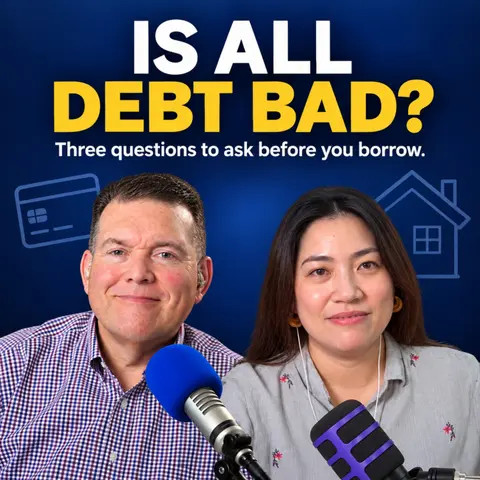
Is all debt bad?
Somebody has probably told you yes, and told you with a straight face. I've been an accountant for 30 years, and I think they're wrong.
You might be thinking, "Ralph, debt is debt. You owe it either way." Nope.
Take $5,000. Carry it on a credit card at 22.15% for a year and you'll pay about $1,108 in interest. Carry the same $5,000 on a federal undergrad student loan at 6.52% and you'll pay about $326.
Same $5,000. A $782 difference, every year.
That gap is why I quit asking whether debt is good or bad. I ask three questions instead.
Question One: What's the Interest Rate?
Start here, because it's the easiest to check.
Federal student loans average about 6.52% for undergrads, 8.07% for grad students, and 9.07% for Parent PLUS loans. A 30-year mortgage lands in about the same range. Credit cards average 22.15%.
Is this a rate I'm willing to pay?
If the answer is no, you already know which debt to look at first.
Question Two: What Did It Buy?
Do I still have something of value, or is it gone?
A house is still there after you borrow for it. A vacation is over the day you get home. I'm not telling anyone experiences are worthless. I'm saying that paying interest on something that's over is a rough way to spend money.
Cars are a tougher call. If you need one to get to work, it has value. Still, ask yourself honestly whether public transportation would cost less.
School deserves the same honesty. Say you're headed to veterinary school at $200,000. At 6.52% or 8.07%, that can work, as long as there's a job at the end that pays enough to cover it. Student loans are easy to get. A job that pays them off isn't guaranteed, and plenty of degrees will never earn enough to service the loan.
Question Three: Does the Payment Fit Your Month?
This is the one that catches people, and I've been caught by it myself. I've spent money that didn't fit my budget, and it got me into real trouble.
Buy now, pay later is the perfect example. The first $50 payment feels fine. So does the second. Somewhere around the third or fourth, you're paying $250 a month.
Look at what happened. The interest was zero, so it passed question one. You got a mattress, so it passed question two. It fails question three, and that's what makes it sneaky.
Why I Don't Say "Never Use Debt"
Say your roof starts leaking and you use a buy now, pay later plan for the repair. You can't have water dripping on your head, and the fix protects the value of your home. That's a smart use of debt.
Everybody's situation is different. Your income, what you're buying, and what you can afford all change the answer.
Four Debts, Run Through the Test
- $8,000 on a credit card from a vacation two years ago, at 22%: Bad debt. The rate is ugly, the trip is gone, and the payments squeeze your budget. Go after it.
- $25,000 car loan at 7%: Good debt. The rate is reasonable and the car gets you to work. Maybe refinance for a better rate.
- $40,000 student loan at 6.52% that doubled your salary: Good debt. That's leverage, and it's exactly what borrowing should do for you.
- $15,000 home equity line of credit for a kitchen, variable rate: Good-ish. The rate beats a credit card and a kitchen adds value to your home. Make sure you can still afford the payment if the rate moves.
The Debt You Can't Explain
Look at your credit card balance. Can you point to anything you bought with it that still has value?
Most people can't. If that's you, no judgment. That balance is the one to go after first.
Try This Exercise This Week
1. List Every Debt
Grab a piece of paper and write down every debt you have. I know you don't want to look. Do it anyway, and eat some chocolate while you do.
2. Add Three Columns
Balance, interest rate, and what it bought.
3. Add a Target Date
Next to each debt, write the date it needs to be paid off.
Now run each one through the three questions. For the ones that fail, pick a method. Snowball gives you quick wins. Avalanche is the best math. Either one works, so pick one and start.
Start With the Numbers, Not the Shame
A balance you can't shake is not a character flaw. It's a math problem, and math problems have answers.
List it.
Rate it.
Date it.
Join Us Live
Join us LIVE at becomingfinanciallyconfident.com/live
Got a debt you're not sure about? Send it to us and we'll work through it on the show.

Licensed Public Accountant
Ralph V. Estep, Jr. is a Delaware-based Licensed Public Accountant (LPA), author, rancher, and media host with more than 30 years of experience in finance, taxation, and small-business leadership. As the founder of Saggio Accounting+PLUS and the creator of the Ask Ralph Media network, Ralph helps entrepreneurs, creators, and everyday families replace money confusion with clarity, confidence, and practical next steps — without shame and without hype.
Ralph's work blends deep professional expertise with a coach's mindset and a communicator's heart. He has held leadership roles across public accounting, financial institutions, law firms, and technology organizations, bringing a rare combination of traditional accounting rigor and modern systems thinking to the people he serves. A graduate of the University of Delaware and Wilmington University (MBA), he is known for turning complex money topics into simple, repeatable frameworks that help people make wiser decisions and build lasting financial stability.
He is the host of Becoming Financially Confident, a live weekday show built on a single conviction: most money stress is not a character problem but a systems problem, and shame is what keeps people from fixing it. The show grew out of Financially Confident Christian, which Ralph hosted for more than 1,200 episodes across eight seasons and earned national recognition. The new show offers the same host and the same feed, opened up to a wider audience.
Through Ask Ralph Media, Ralph hosts several other programs. Grit and Growth Business… Read More
Making Money, Having Money, and Keeping Money: Why the Difference Matters